
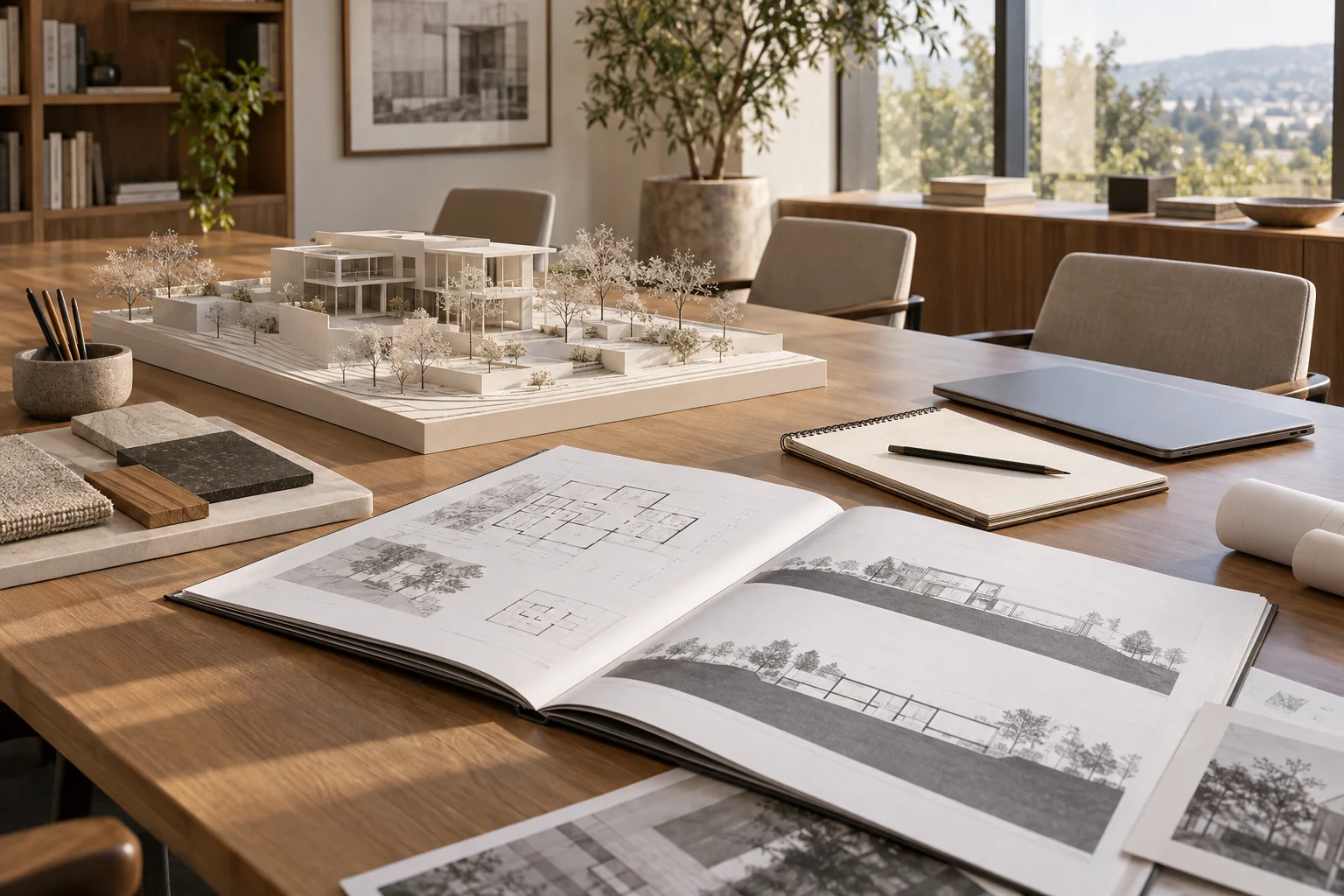
Prepare for an architect interview by understanding the role, selecting work that demonstrates your contribution and practising clear explanations of design, coordination and delivery decisions. An interviewer may discuss a past project, ask you to read a drawing or set a software task. Support each answer with a specific situation, your action and what you learned rather than saying you can use every program.
Editorial review: 11 October 2026. SMD Decoration presents a practical preparation framework. Questions and tests vary by practice, role and experience. The sample answers are rehearsal examples: replace their details with work you actually did.
Understand the role before rehearsing
| Role | Evidence to prepare |
|---|---|
| Design architect | Brief interpretation, site analysis, layout alternatives and the reason for selecting a solution. |
| Technical architect | Construction drawings, details, revisions, material schedules and coordination within your responsibility. |
| Site architect | Approved drawing checks, recorded observations, quality follow-up and escalation of discrepancies. |
| Interior designer | User circulation, furniture, materials and lighting linked to details and budget. |
One job may combine several responsibilities. Ask which project stages you will support and who approves drawings. Do not assume an architect is expected to approve structural calculations or change services outside their competence and authority.
A clear structure for an answer
Use context, responsibility, decision, outcome and lesson. Explain the brief and constraints, then identify your own contribution. Do not invent a saving percentage or performance gain you did not measure. A documented approval or a closed review comment can be a useful outcome where it is accurate.
Rehearsal example: “For a student apartment project, the brief required separation between visitors and bedrooms. I compared two layouts and mapped circulation before adjusting the corridor entrance. I presented the alternatives to my tutor and explained the privacy trade-off. I learned to resolve circulation before choosing finishes.” Clearly identifying academic work makes the example credible.
12 architect interview questions to practise
1. Tell us about yourself and your fit for this role
Connect your background to the job, with one contribution you can show. A useful sequence is your specialism, relevant project types, a documented strength and what you want to develop in the role. Avoid reciting your entire CV or claiming competence in every project stage.
2. How do you begin a new design?
Explain how you turn the brief into requirements, check available information, study use and circulation, identify constraints and compare alternatives. You might describe recording unresolved assumptions and presenting two options with their limitations. Selecting colours or producing a polished image should not replace understanding the brief.
3. What exactly did you do on this project?
Name the team, stage and drawings you produced or reviewed. Separate your contribution from collective work and identify who approved decisions. For example: “I prepared the furniture layout and materials schedule under the team leader’s review; I did not design the structure.” Precise ownership is more useful than claiming the whole project.
4. How do you handle a design a client rejects?
Clarify whether the concern is use, cost, identity or appearance. Offer an alternative that respects the brief and explain the effect on space, materials or programme. Discuss how you recorded agreement and updated the next issue, without dismissing the client’s understanding.
5. How proficient are you in AutoCAD, Revit or visualisation tools?
Describe a task you can perform and a permitted file that demonstrates it. Distinguish modelling, drawing production, detailing and information management. An honest example is: “I can organise views and produce architectural sheets from a model, but still need review when setting up office standards.” Software names do not substitute for drawing understanding.
6. What would you do about a duct conflicting with a ceiling or structural element?
Locate the conflict, record the drawings or models and information versions involved, and explain its impact. Discuss options with the relevant disciplines and approval authority. Do not independently alter the structure or service route. Describe following the decision through and updating information after approval.
7. How do you check drawings before issue?
Show a checklist drawn from your work: agreement between plans and sections, dimensions, detail references, door and material schedules, revision identification and approval status. Explain how you record and close comments. A file being the newest does not establish that it is authorised for construction.
8. How do you work with a limited budget?
Protect essential requirements, identify comparable items and assess alternatives using samples or product information, including maintenance and installation implications. The lowest price is not automatically suitable. A rehearsal example is comparing finishes against required performance, supply availability and installation scope, then seeking client approval.
9. How do you handle a short deadline and overlapping deliverables?
Explain priorities, dependencies, risks, ownership and early communication when dates conflict. Identify what can go for review and what requires input from others. Promising to work all night does not demonstrate planning or drawing quality control.
10. What if site conditions differ from a drawing?
Record the location, available measured information and permitted photos, and report through the project’s agreed procedure. Seek an authorised instruction before a change affecting safety or scope. This is an interview discussion, not a universal construction procedure: responsibilities depend on the project and contract.
11. Describe a mistake and what you learned
Choose a specific example you can discuss without disclosing confidential information. Explain discovery, correction and the review step you added. Avoid blaming colleagues or inventing a flawless story. An outdated detail reference corrected before issue is a usable example only if it actually happened to you.
12. How do you consider usability and maintenance?
Relate the answer to the users and project: legible circulation, suitable access, durable materials, maintenance access and appropriate lighting. Explain what you studied and what requires specialist or local requirements checks. Do not claim code compliance or energy savings without relevant evidence and review.

Build a portfolio that shows your contribution
RIBA’s guidance emphasises design thinking, personal contribution, relevant project selection and rehearsal. That principle informs this guide; the questions, examples and preparation checklists are SMD Decoration’s practical suggestions. Read RIBA’s portfolio storytelling guidance.
- Lead with a relevant project, followed by a plan or section and a detail that explains your contribution.
- Label work accurately as academic, proposed, developing or built, and state your role and project stage.
- Prepare a concise presentation and additional detail if requested; do not impose one page count on every role.
- Remove confidential client information and obtain necessary permission to show previous employers’ work.
- Test text size, file opening and navigation on the intended device, with a local copy for connection problems.
Practise two situations rather than memorising scripts
Design exercise: take a space you know, explain its user’s needs and compare two layouts. Prepare a simple plan and a constraints note. Check whether you explained the choice and separated confirmed information from assumptions requiring verification.
Technical exercise: choose a drawing you may share, identify its revisions and approval status, and describe three checks before issue. Explain how you would record a coordination comment and who decides the solution. Graduates can use an academic project, clearly labelled.

Preparation checklist
- Read the job description and identify responsibilities, software and project stages.
- Study the practice’s public work and prepare a specific reason for your interest.
- Match key requirements to evidence from your experience and identify skills still being developed.
- Check your CV, portfolio, links, appointment details and travel or video arrangements.
- Ask whether there is a practical test and clarify timing, outputs and permitted resources.
- Rehearse aloud and record a short presentation to reduce vague statements and unnecessary length.
Questions to ask the practice
Ask about project stages, drawing review, responsibility boundaries, site coordination, training and performance review. When discussing pay, clarify the role, location, hours, benefits and offer scope. A general online salary figure does not represent every country or experience level.
A verifiable answer is stronger than an exaggerated one. If you do not know a detail, explain what you would check and whom you would consult. Do not claim professional registration or delivery experience you do not possess, or promise a guaranteed job outcome.
Related SMD Decoration reading
Start your dream project today with SMD Decoration
Your space, your vision. SMD Decoration offers interior design, fit-out and renovation in Turkey and Arab markets: homes, apartments, villas, offices, hotels, restaurants, healthcare, education and exhibitions. Reflect your identity, needs and budget.
Explore finishes, painting, upholstery, custom furniture and lighting in modern, classic, contemporary, industrial or eco-conscious styles. Agree services, execution details and handover before work.
SMD Decoration websites
- Main website: smddecoration.com
- Turkey: smddecoration.net.tr
- Oman, Kuwait & Bahrain: turkiyedecoration.com
- Qatar: smddecoration.qa
- UAE: smddecoration.ae
- Saudi Arabia: smddecoration.sa
- Saudi Arabia — additional site: smddecoration.net
- Libya: smddecoration.info
- Iraq: smddecoration.site
- Syria: smddecoration-syria.com
SMD accepts conventional currencies and bank transfers; Bitcoin and other cryptocurrencies are not accepted.
Bring your vision to life with SMD
Send your city, project type, plans, site photos, use requirements, budget and target date. Discuss design, detailing, coordination, installation and handover scope with SMD Decoration before work begins.
Email: info@smddecoration.com
Project enquiry