
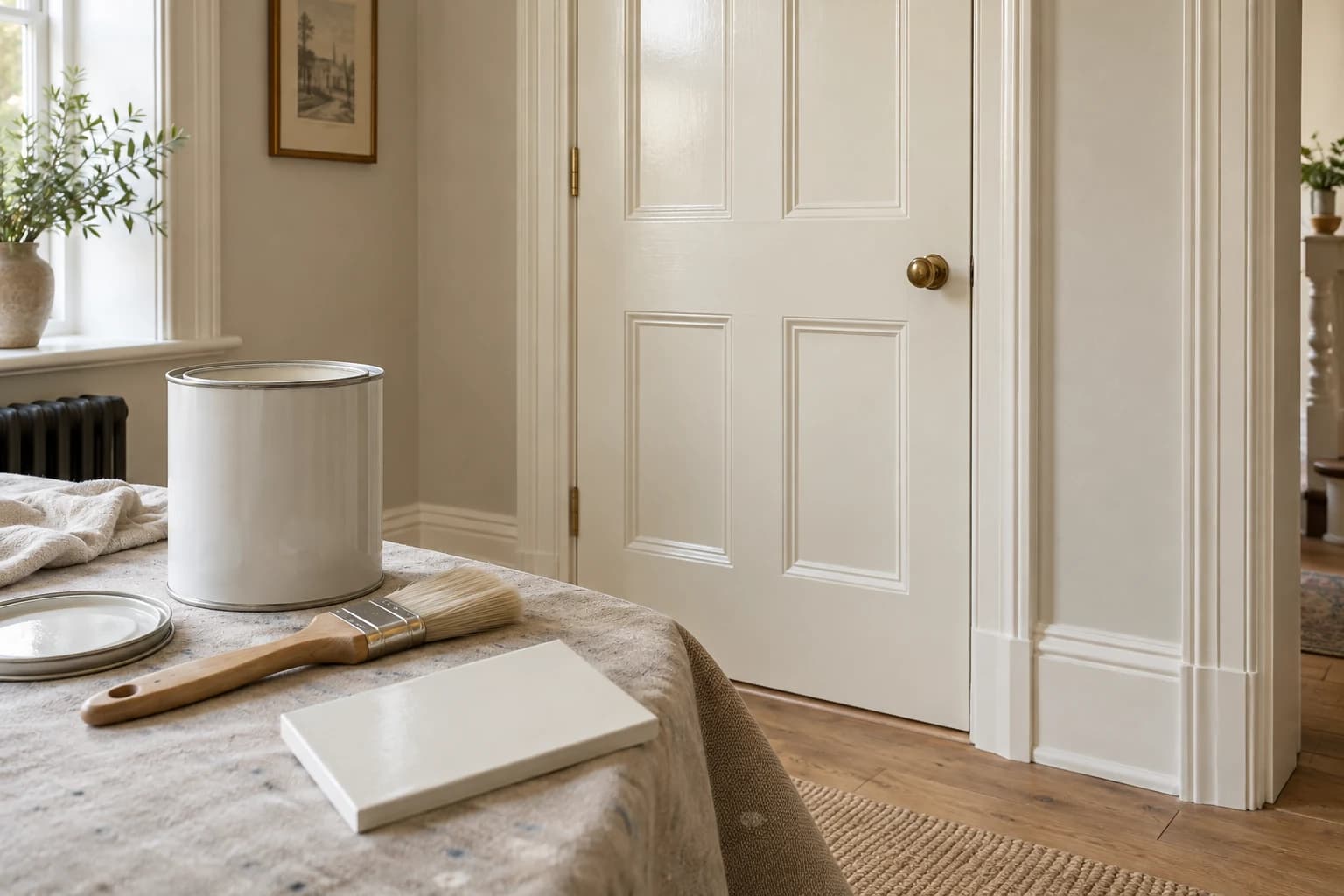
Where can oil-based paint be used? Oil or alkyd enamel may suit doors, trim and the substrates listed in its technical data. Select a coating system approved for the surface and indoor or outdoor exposure, then compare a suitable water-based enamel. The term “oil-based” alone does not establish quality, resistance or drying time.
Prepared by SMD Decoration · Content reviewed: 11 October 2026
What does oil-based paint mean in building finishes?
This guide concerns architectural coatings for doors and buildings. In trade usage, “oil-based paint” often describes traditional enamels, including alkyd products. Check the exact product, binder, solvent and approved uses. Waterborne alkyd products also exist, so the resin name alone cannot tell you how to thin the coating or clean tools. [7]
Sheen describes appearance rather than chemistry. Matt, satin, semi-gloss and gloss finishes can occur in different coating families. Combine colour and sheen decisions with adhesion and maintenance requirements, and request a sample on a substrate comparable to the project.

Which surfaces should you consider?
Start with the substrate rather than the colour on the tin. Dulux Super Enamel Semi Gloss is one example of an interior oil enamel specified for doors, trim and certain walls. Those are that product’s uses; they do not approve every oil paint for every surface. [1]
| Surface or requirement | What to verify |
|---|---|
| Timber door and trim | Approval for timber or MDF, suitable primer, sheen and return-to-use time. |
| Metal component | Metal type, condition and the specified preparation and protection system. |
| Room wall | Wall approval, cleaning requirements, appearance, odour and application conditions. |
| Exterior exposure or direct water | Explicit approval for that exposure; “oil-based” or “washable” is insufficient. |
A deeper door colour can create a focal point against a quiet wall. Review a physical sample under the room’s lighting, balancing reflections with mouldings and hardware. The illustration helps explore the colour relationship; approve the final material using a real sample.
Oil enamel or water-based enamel?
Water-based enamels designed for doors and trim are available, such as Dulux Aquanamel. “Water-based” does not automatically mean ordinary wall paint. Compare two products approved for the substrate, including tool cleaning, recoating and service requirements. [2]
Make the decision concrete: when must the door return to use? Is the finish white? Which sheen is acceptable? What is the existing coating? Which primer is specified? Request a recommendation naming the products rather than assuming one entire coating family is always superior.
Potential limitations: yellowing and adhesion
Traditional oil and alkyd coatings may yellow, with white finishes showing the change clearly. Low light, heat, moisture and contamination can contribute. Diagnose the cause before repainting; a water-based alternative cannot automatically remove an underlying stain or leak. [3]
Peeling can involve a dirty, wet or glossy substrate, or an earlier coat with weak adhesion. Address moisture sources and assess the existing coating before covering it with additional layers. [5]
Do not substitute decorative paint for a required waterproofing system or infer heat or smoke insulation from its name. Where a particular performance matters, request evidence for the chosen product and exposure.

Application and repainting sequence
- Record the condition: substrate, existing coating, moisture, peeling and stains.
- Specify the system: compatible topcoat, primer and preparation using current technical data.
- Prepare the surface: follow instructions for cleaning, drying and removing unsound material; timber, metal and walls need different assessments.
- Make a sample: approve colour and sheen, then assess adhesion after the product’s specified interval.
- Apply as specified: use the stated thinning, tools, film thickness and environmental conditions, following product safety instructions.
- Allow time and inspect: distinguish touch dry, recoating and return to service or cleaning.
When changing an old oil coating to a water-based finish, verify surface preparation and the recommended primer. Primers designed for adhesion to glossy coatings exist, but the choice must match both the existing layer and the new finish. [4]
Drying times vary with the product and site conditions; one number cannot represent every oil paint. Excessive film thickness or early recoating can cause wrinkling. Follow the selected product’s instructions at each stage. [1, 6]

How should doors and trim be measured before ordering paint?
Separate quantities by substrate and proposed coating system. Record door count, condition, the area of each face and trim as separate items. A simple calculation for a flat door leaf 0.90 m wide and 2.10 m high is 0.90 × 2.10 × 2 = 3.78 m² for both faces. This is not the complete door assembly: edges, trim, glazing and projecting details require separate measurement. Estimate litres later using measured area, coat count and the selected product’s coverage, then review waste and pack sizes with the supplier.
For sample approval, record the substrate, existing coating, named primer and finish, colour code, sheen, application date and conditions. Agree when to inspect the sample using the product’s instructions, and compare it in daylight and the lighting actually used in the room. A screen image helps the discussion; the agreed physical sample guides execution.
What should a quotation and handover include?
- Surface quantities and condition, separating doors, trim and walls.
- Product names, colour codes and sheen, plus preparation and primer.
- Coat count, the product’s stated coverage, scheduling and maintenance limits.
- The approved sample and appearance criteria, protection of adjacent items and cleanup.
Compare preparation, materials, application, protection and existing defect repairs as separate scope items. This makes differing quotations easier to assess. Avoid judging a bare price per square metre or a service-life promise without a named product and defined conditions.
For a wider comparison of coating families, read our wall paint types guide. This article focuses on selecting enamel for doors and trim and planning repainting.
For a discoloured white finish, begin with why white paint turns yellow and how to address it. For the relationship between a door and its wall, see the colour wheel and colour coordination.
Technical references
Numbered references below were reviewed on 9 October 2026. Product examples do not imply local availability or approval for every project. Use the selected product’s current technical data for execution.
- Dulux — Super Enamel Semi Gloss
- Dulux — Paint Finishing Schedule: Aquanamel
- Sherwin-Williams — Yellowing
- Sherwin-Williams — Multi-Purpose Water-Based Acrylic-Alkyd Primer
- Sherwin-Williams — Peeling
- Sherwin-Williams — Exterior Troubleshooting FAQs: Wrinkling
- Sherwin-Williams — Pro Industrial Waterbased Alkyd Urethane
Start your dream project today with SMD Decoration
Your space, your vision. SMD Decoration offers interior design, fit-out and renovation in Turkey and Arab markets: homes, apartments, villas, offices, hotels, restaurants, healthcare, education and exhibitions. Reflect your identity, needs and budget.
Explore finishes, painting, upholstery, custom furniture and lighting in modern, classic, contemporary, industrial or eco-conscious styles. Agree services, execution details and handover before work.
SMD Decoration websites
- Main website: smddecoration.com
- Turkey: smddecoration.net.tr
- Oman, Kuwait & Bahrain: turkiyedecoration.com
- Qatar: smddecoration.qa
- UAE: smddecoration.ae
- Saudi Arabia: smddecoration.sa
- Saudi Arabia — additional site: smddecoration.net
- Libya: smddecoration.info
- Iraq: smddecoration.site
- Syria: smddecoration-syria.com
SMD accepts conventional currencies and bank transfers; Bitcoin and other cryptocurrencies are not accepted.
Bring your vision to life with SMD
Share your city and photos of the doors, trim and other surfaces, with the desired colour, sheen and existing coating condition. Discuss coordinated finishes, preparation, scope, samples and handover.
Email: info@smddecoration.com
Project enquiry