
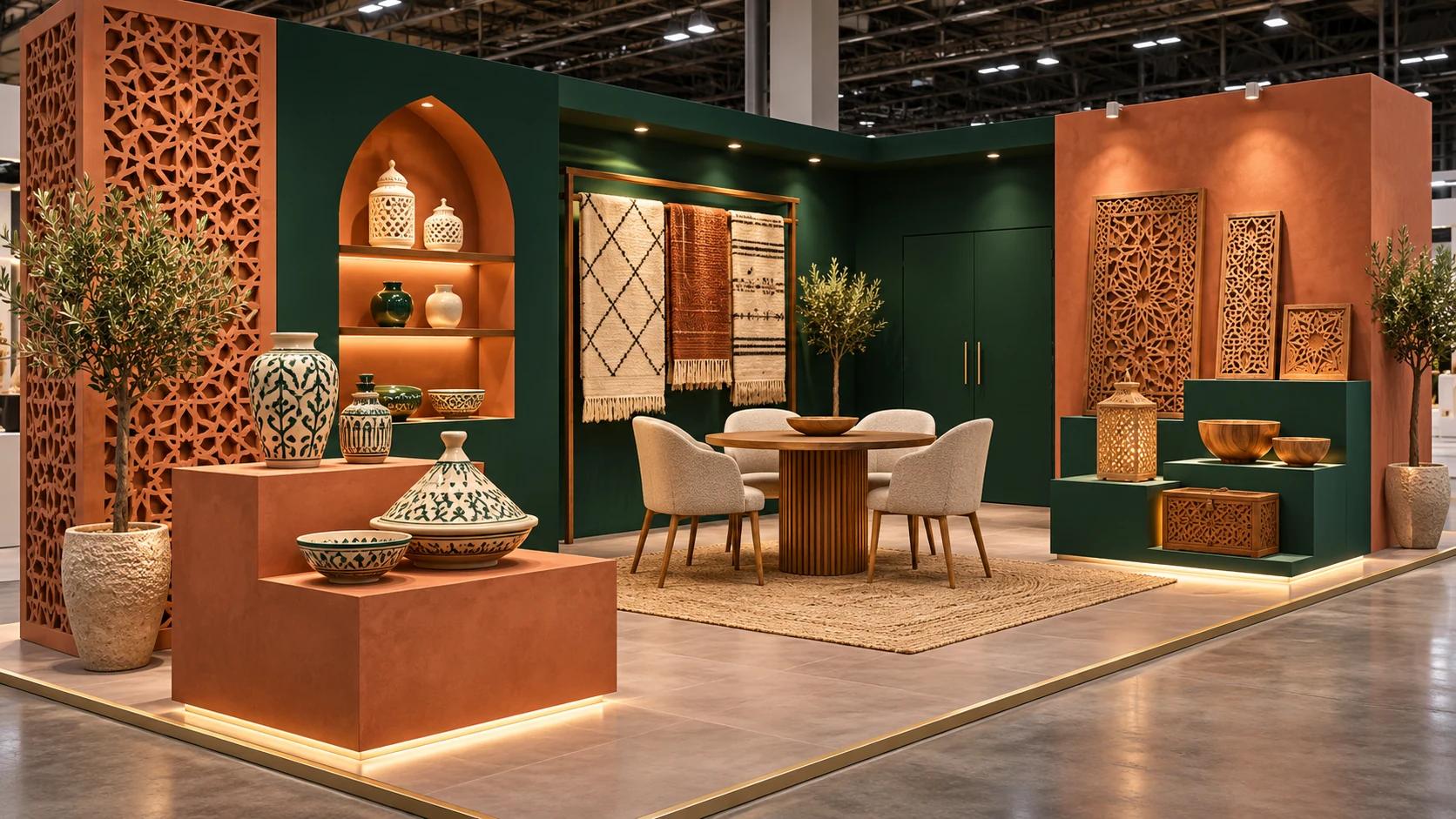
An effective exhibition stand for a manufacturer or exporter in Morocco connects the product’s appearance with the information a buyer needs: material, finish, sample reference and a useful next step. Choose a principal item, organise the comparisons and provide a place to discuss requirements. This guide explains how to brief SMD on a design that supports a commercial conversation.
Help buyers understand the product as well as admire it
A visitor may appreciate a furniture piece, light fitting, finish or craft product without learning how to specify or purchase it. The stand should turn that first impression into organised information. Begin with what your intended buyer needs to compare, ask and decide, then select an appearance expressing the brand.
Identify whether you want to meet retailers, distributors, designers or hospitality buyers. Their questions differ. SMD’s exhibition stand design guide covers the wider preparation process; this article focuses on presenting products and craftsmanship with information useful to sales and export discussions.
Select the display collection before the colour scheme
Create a principal product family carrying the participation’s message, supporting alternatives and material available on request. Giving every item equal visual weight can turn a stand into an inventory display. Decide what buyers should remember and connect it to an intended use, such as furniture for a project or finishes that need comparison.
The phrase Moroccan product cannot replace a description of its value. Explain the material, finish, customisation or design using information the business can substantiate. Where hand production creates relevant natural variations, explain them. Where products are industrially made, present their actual characteristics without adding an unrelated heritage narrative.
Move from a use setting to the relevant detail
One presentation route lets a visitor see an item in use, inspect its material and then discuss alternatives with staff. A furniture collection might need a principal piece and a surface for fabric and finish samples. A wall-material display might benefit from a representative joint or corner rather than many unrelated images.
The display story is an information sequence. Ask whether a buyer could describe the offer to a colleague after a short visit. If only an arch or backdrop is remembered, reduce competing decoration. Discuss the relationship between the product and its setting through SMD’s commercial fit-out service.

Review materials and colours in the proposed setting
Light direction, placement and adjacent surfaces affect how a finish is seen. Review an actual representative sample with the proposed lighting and neighbouring product. Wood, metal and fabric details may be clearer in one arrangement than another. Assess the arrangement visually rather than relying on a colour name or luxury description.
Avoid coloured lighting that confuses evaluation of the product’s colour. For photographs and digital presentations, review their relationship to samples and explain whether an image shows a concept or an actual product. The aim is an honest discussion, rather than a promise of perfect matching across every screen, print and material.

Example: a lighting and decorative-product collection
Imagine a company presenting lighting and complementary accessories at a trade event in Morocco. It wants to meet project buyers and begin a specification discussion. A principal item, finish samples, a searchable product file and a meeting table could form the brief. This is a hypothetical programme, not an executed SMD project or approved layout.
| Display element | Buyer question | Information needed by the designer |
|---|---|---|
| Principal item | What distinguishes this collection? | Size, weight and an agreed presentation method |
| Finish samples | Which alternatives are actually available? | Correct names, references and sample photographs |
| Product card | Is it suitable for the intended use? | Substantiated specifications and current information |
| Digital presentation | How does the collection look in use? | Authorised images and clear files |
| Meeting space | What is needed for a commercial proposal? | A requirements and follow-up method |
Develop the stand around this list. Where a piece requires suspension or operation, resolve the relevant requirements with the specialist and organiser before fabrication.
Make product cards useful to the sales conversation
Provide the product name, reference, material, available alternatives and a way to obtain approved detail. Separate established information from items needing an individual quotation, such as quantity, customisation or delivery arrangements. A small card should remain readable and useful for comparison.
Select languages from the actual event audience and intended meetings, including Arabic, French or other languages where appropriate. Review specialist terminology with the product team. A clear bilingual card can be more useful than three cramped translations. Match references between the card, catalogue, physical sample and follow-up record.

Give buyers a practical comparison surface
Some products need two adjacent samples, an open file or comparison with a project image. Choose a surface supporting that task. Keep sample retrieval near the presenter without making the meeting area a route for servicing or storage for visitors’ bags.
An open corner may suit an initial conversation; a project specification discussion may need a quieter arrangement within the actual area and event rules. Move from appreciation of the piece to questions about use, reference quantities and an agreed next step. Avoid price or delivery promises that the commercial decision-maker has not confirmed.
Present craftsmanship without stereotypes
An exhibition in Morocco does not automatically need traditional decoration. Nor does every crafted product need an intensely coloured setting. Select details connected to the brand: a joint, material, modular rhythm or presentation method. A restrained setting may suit a highly detailed item, while a simple product may need its use explained through the background.
Before using artwork, cultural motifs or a maker’s photograph, establish relevance and usage rights. A concept does not prove hand production, local material origin or environmental certification. Explore ideas in the exhibition stand category, then choose using the company identity and verified product information.
Separate supplier work from organiser services
Match the preparation list to the booked plan and participation package. Bespoke sample units may be required while some furniture or services come through the organiser or appointed providers. Assign manufacture, printing, transport, installation, service ordering, approvals and receipt on site.
Discuss drawings, quantities and technical coordination within the agreed scope. A material recommendation or a screen shown in a rendering does not establish that its supply and service charges are included. Requirements from one Casablanca event cannot automatically be applied to another participation; check its own manual, programme and services.
Request a quotation with assessable detail
Separate design, components, finishes, graphics, lighting, furniture, devices, transport, installation and dismantling. Identify owned and hired items and what returns to the company after the event. Use matching quantities and units when comparing offers; a lower total with a different scope may still require additions.
If imported elements are involved, distinguish them from local fabrication and site services. State the currency, quotation validity and transport responsibilities, including associated costs as confirmed by the relevant providers. This guide supplies no market rate or price per square metre. Its purpose is to help obtain a reviewable scope and alternatives preserving the principal presentation.
Prepare the next commercial step before opening
Record the product discussed, the buyer’s requirement and the next step they accepted. That may mean sending a specification, arranging a call or preparing an offer against an agreed list. Collect the contact information needed for that task with the visitor’s agreement and name the follow-up owner.
Do not judge the stand only by catalogue distribution. Define a relevant conversation, then track complete requests, quotations and opportunities advancing to another stage, with the period and criteria recorded. Repeated questions about basic information can identify a product card or presentation needing improvement at the next event.

Brief SMD on a stand that supports the product decision
Send the Morocco event, booked plan, open sides, exhibitor manual and handover dates. Add product photographs, dimensions, references and actual alternatives. Describe the intended buyer, languages, meeting format and craft or technical details that matter. Include the reference budget with currency and any suppliers already appointed.
Review SMD’s published portfolio, then use the contact page to discuss design deliverables, coordination and the execution parties available for the project. Request a concept making the principal product understandable and information easy to carry into follow-up. A clear, organised presentation gives the team a practical basis for a serious buyer conversation.
Start your dream project today with SMD Decoration
Your space, your vision. SMD Decoration offers interior design, fit-out and renovation in Turkey and Arab markets: homes, apartments, villas, offices, hotels, restaurants, healthcare, education and exhibitions. Reflect your identity, needs and budget.
Explore finishes, painting, upholstery, custom furniture and lighting in modern, classic, contemporary, industrial or eco-conscious styles. Agree services, execution details and handover before work.
SMD Decoration websites
- Main website: smddecoration.com
- Turkey: smddecoration.net.tr
- Oman, Kuwait & Bahrain: turkiyedecoration.com
- Qatar: smddecoration.qa
- UAE: smddecoration.ae
- Saudi Arabia: smddecoration.sa
- Saudi Arabia — additional site: smddecoration.net
- Libya: smddecoration.info
- Iraq: smddecoration.site
- Syria: smddecoration-syria.com
Bring your vision to life with SMD
Send the Morocco event, city, venue, booked plan, dimensions, open sides, exhibitor manual and handover dates. Include company identity, product photographs, sizes, references and actual alternatives, intended buyers, languages, meeting needs, budget and currency, and existing suppliers. We can discuss design, sample and drawing deliverables, supply, venue services, transport, installation, dismantling and acceptance responsibilities, and available execution arrangements before agreement.