
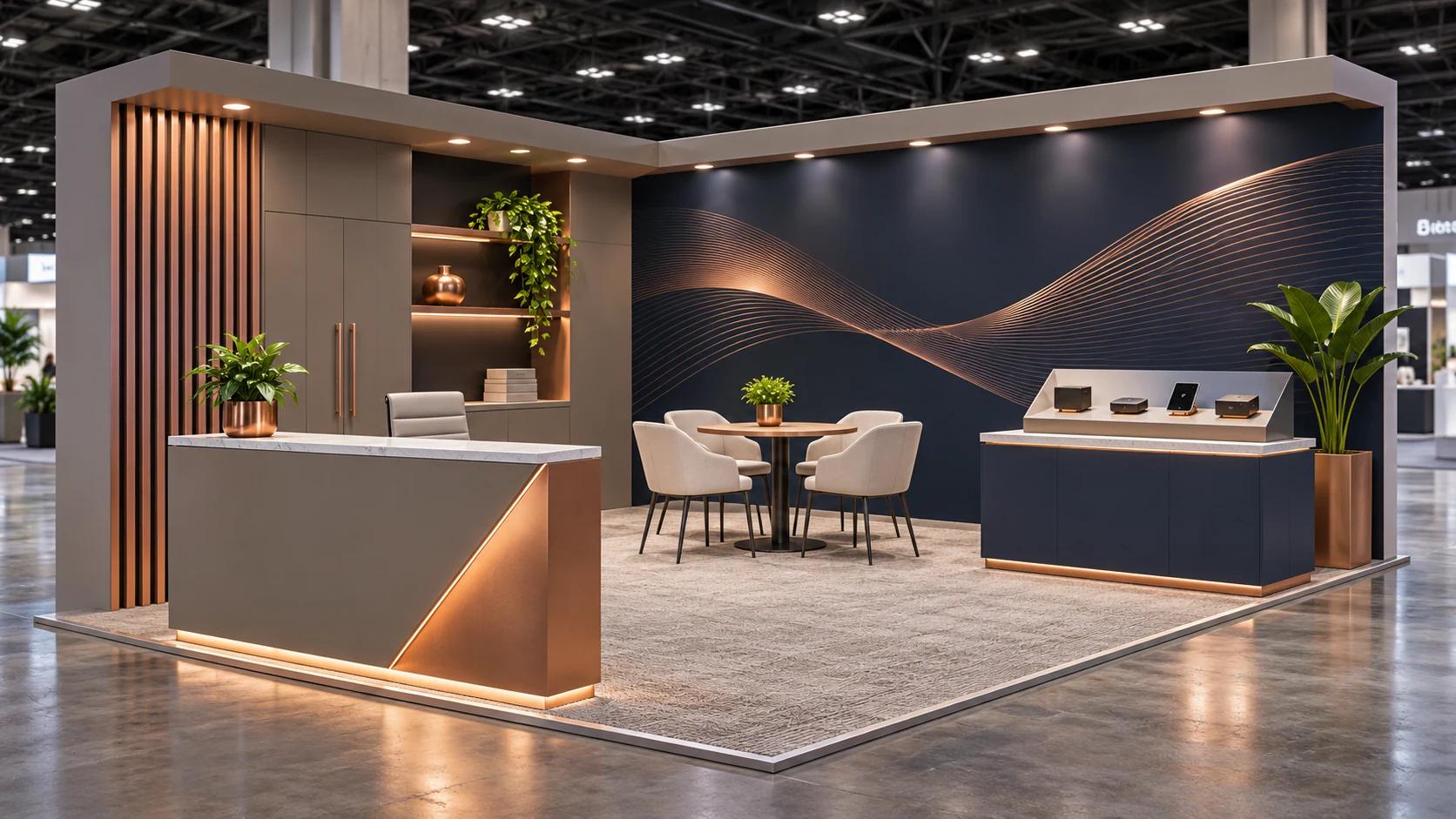
A well-planned US or Canadian exhibition starts by separating stand design, shipping, material handling and installation, then assigning each task a responsible party, date and deliverable. This guide helps Arab exhibitors review bookings, venue services and budgets, protect their identity during remote approvals and prepare a clear file for discussing a practical design scope with SMD.
Your products can reach the correct city while the stand remains unready: the shipment may not have entered the hall, or an essential service may not have been ordered. Begin with the complete participation brief. What should a buyer understand, what will you display, how will the components reach their working positions and who accepts them before opening?
Those questions help you commission the work actually required. Discuss the layout and commercial objectives through SMD's commercial project services, then maintain a file for the actual event and city. A US participation and a Canadian participation need independent reviews of providers, services and agreements.
Separate shipping, material handling and installation
Shipping moves components to an agreed destination. Material handling deals with them within the event's receiving and delivery arrangements. Installation turns those components into the working stand defined by the agreed scope. Several providers may deliver these stages, so make the boundaries explicit in the quotations.
The Freeman exhibitor guide explains these distinctions and presents handling, labour and electrical services in an event-service context. For your own participation, ask where the carrier's responsibility ends and who takes over. Shipping charges do not automatically include every movement into the booth, nor does furniture assembly automatically cover every hall service.
Collect the event file before fixing the design
Record the event edition, organiser, venue, hall and stand number, together with participation, access, handover and dismantling dates. Supply the booked plan, dimensions, open sides and fixed features shown on it. Include the organiser's exhibitor manual and booking confirmation.
Establish whether the booking is space only or a package including specified walls, flooring, furniture or services. List what needs adding or replacing. This avoids designing around an unavailable inclusion or buying a service twice. Record document dates and approvers, especially when decisions move between Arab headquarters and a local participation team.

Design around an intelligible buying conversation
A company seeking distributors needs a different explanation from one demonstrating a technical system. Define the message a passing buyer should understand, the product or model supporting it, and where the conversation moves when detailed discussion is needed.
One clear principal display with suitable meeting space can work better for the brief than competing displays. Put detail in an organised catalogue or a staff-led digital presentation and keep the frontage concise. The SMD exhibition stand guide explains this general journey; an international project must turn it into specific deliverables that can be accepted away from headquarters.
Write the service matrix before seeking quotations
A responsibility schedule makes offers easier to compare and reveals work that could fall between providers. Start with a concise table, then develop it as the event manual and quotations arrive. “Complete fit-out” is insufficient if it leaves the receiving point or service-ordering party undefined.
| Package | Scope question | Reviewable output |
|---|---|---|
| Design | Who issues and approves the final package? | Numbered drawings and files |
| Shipping | Where does transport responsibility begin and end? | Packing list and delivery point |
| Material handling | Who moves items within event arrangements? | Service request and assigned responsibility |
| Installation | Which components and tasks are included? | Assembly and acceptance plan |
| Venue services | Who orders electricity, connectivity and required services? | Confirmed order schedule |
| Event close | Who dismantles, packs and hands over for return or storage? | Return inventory and condition record |
Link arrival to the accepted receiving window
A flight or truck arrival is not a ready-to-use stand milestone. Allow for receiving, handling, installation and checks, then establish who authorises access and when. Each case needs information connecting it with the company, event and booth. Give the responsible provider the actual handling information for sensitive products.
In the Canadian example, MTCC's move-in and move-out information directs exhibitors to the event kit and states that the centre does not receive exhibitor shipments before move-in days. This is venue-specific. Use it as a reason to confirm your actual receiving window, rather than assuming any hall can store an early shipment.

Decide what should travel and what can be sourced at destination
Not every stand component needs to travel with the product. Compare shipping brand-specific elements with sourcing suitable furniture or equipment at destination, after confirming specifications, condition and use costs. The principal display may need bespoke production while other pieces can be simpler without weakening the product explanation.
Review graphics, display units, screens, seating, samples and operating accessories separately. Include packing, return and possible later use. Initial purchase price alone cannot determine which option suits one event or a repeated participation programme with different future bookings.
State currency, tax treatment and scope for every amount
If an offer says “dollars”, ask whether it means US dollars or Canadian dollars. Record the quotation date, validity and stated tax treatment. Separate space-booking expenditure from preparation, and distinguish items paid directly by the exhibitor from those undertaken by its appointed provider.
Compare screen quantities, hire periods, finishes, out-of-hours work and the destination of components after closing. Mark an unpriced service as “quotation required” with a responsible person and follow-up date. Do not turn uncertainty into zero or compare conversions without a dated exchange-rate basis.

Make remote approval usable for production
An attractive image is insufficient for production. Review it with dimensions, materials, colours, messages and equipment positions, then identify the agreed revision. Record clear sample photographs and comments, including when physical samples or further review are needed.
SMD's architectural and engineering consulting provides a route to discuss the required project outputs and coordination scope. Name the Arabic and English content approvers and the technical and budget decision-makers. Each later change should identify its effect on drawings, production, services and timing before contradictory instructions reach site.
Prepare the team as carefully as the furniture
Rehearse greeting a visitor, explaining the product and agreeing a next step before staff travel. Keep catalogues, samples and demonstration material where they will be used. Identify storage for personal items and reserve supplies so the frontage can remain orderly throughout operation.
If staff use Arabic and English, agree product names, the short message and how enquiries are recorded. Each person should know which commitments they can make and which require headquarters review. Assigning roles helps prevent everyone gathering behind one counter while an important product lacks a knowledgeable demonstrator.

Make handover a short operating trial
Before opening, review messages, finishes, equipment, storage and team material. Relevant technical acceptance of elements and services remains with the responsible specialists and event requirements. Run the final digital content, open storage doors and review connection positions with the party responsible for them.
Record each observation with a photograph, reference and responsible person. Distinguish an operating blocker from a comment with an agreed remedy, and identify the contact for support during the event. Explore SMD's general project portfolio to discuss design language, then define deliverables appropriate to your particular exhibition.
Hypothetical example: two participations, separate requirements
Imagine a company exhibiting in a US city and later in Toronto. It can retain a common message and product priorities while keeping independent plans, bookings, manuals, service schedules, currencies, supply arrangements and acceptance dates. Approval for the first event does not automatically apply to the second.
Content and some components may be reusable if they fit the next booking and remain suitable. Review condition, transport, storage and adaptation requirements before deciding. This is a planning illustration, not a completed project or market quotation, and it does not establish that reuse or shipping is always cheaper.
Start the SMD discussion with a clear participation file
Send SMD Decoration the event, city, venue, participation and handover dates, stand number, dimensions, open sides, booked plan and exhibitor manual. Add products, commercial objectives, languages, identity assets, budget and currency, and identify local responsibilities.
Discuss a design connecting how the company looks with how its team works, supported by clear deliverables and coordination boundaries. Specific information turns “we want a distinctive booth” into a project that can be assessed, approved and accepted. It gives a potential buyer a clear reason to stop and understand the offer, without relying on unsupported sales promises.
Start your dream project today with SMD Decoration
Your space, your vision. SMD Decoration offers interior design, fit-out and renovation in Turkey and Arab markets: homes, apartments, villas, offices, hotels, restaurants, healthcare, education and exhibitions. Reflect your identity, needs and budget.
Explore finishes, painting, upholstery, custom furniture and lighting in modern, classic, contemporary, industrial or eco-conscious styles. Agree services, execution details and handover before work.
SMD Decoration websites
- Main website: smddecoration.com
- Turkey: smddecoration.net.tr
- Oman, Kuwait & Bahrain: turkiyedecoration.com
- Qatar: smddecoration.qa
- UAE: smddecoration.ae
- Saudi Arabia: smddecoration.sa
- Saudi Arabia — additional site: smddecoration.net
- Libya: smddecoration.info
- Iraq: smddecoration.site
- Syria: smddecoration-syria.com
Bring your vision to life with SMD
Send the actual US or Canadian event, city, venue, edition, stand number, booked plan, dimensions, open sides, manual and receiving, access and handover dates. Add products, languages, identity files, team functions, budget with currency and appointed local providers. We can discuss design deliverables and responsibilities for shipping, handling, venue services, assembly, operating checks, dismantling and return or storage, with available execution arrangements before agreement.