
Prepared by the SMD Decoration team · Content and source review: 11 October 2026
Modern wall paint ideas coordinate walls and ceilings with furniture and lighting, using a calm single colour, an accent wall, a two-tone arrangement or geometric shapes. Assess the surface and room use first, then choose the colour and sheen and approve a sample before painting the entire area. Surface preparation, clear boundaries and consistent application matter as much as the design.
Use the pictures in this guide to compare decorative wall painting ideas for your home. Some demonstrate colour placement; others show how samples are compared. A photograph cannot establish an exact paint code or product specification. Build a scheme around the actual room, rather than trying to reproduce a screen colour without checking it.
Choose a wall design before buying paint
Record the room dimensions, ceiling height, doors and windows, and identify the furniture you will keep. Check the walls for peeling, stains and weak areas. Distinguish a colour refresh on a sound surface from repair work that must precede painting. Consider how heavily the room is used, how its walls will be cleaned and whether it will remain occupied during the work.
Select a reference for the overall idea and draw the colour boundaries on a simple wall elevation. Include the sofa or bed, curtains, switches and sockets so small details do not interrupt an important shape. Request a sample of the proposed colour and design on a suitable surface. Agree what will be prepared, retained or replaced before committing to the full scheme.
| Idea | When to consider it | What to review |
|---|---|---|
| Calm single colour | Furniture with several patterns | Relationship with flooring and curtains |
| Accent wall | Behind a sofa or bed | Wall boundaries and lighting |
| Two-tone paint | Bedroom or entrance | Division height and continuity at corners |
| Geometric shapes | A limited decorative feature | Scale and clean edges |
| Decorative paint effect | A visually prominent wall | Product system, application sample and repair |
Seven modern paint ideas for walls and ceilings
1. Repeat a calm base colour
Warm white, beige and restrained grey or green tones are options to test against the existing finishes. Compare actual samples: the same white can appear different beside cool stone or warm timber. Give the base colour a clear role, then repeat an accent in a cushion, artwork or small detail rather than assigning a different colour to every wall.
2. Create an accent wall behind furniture
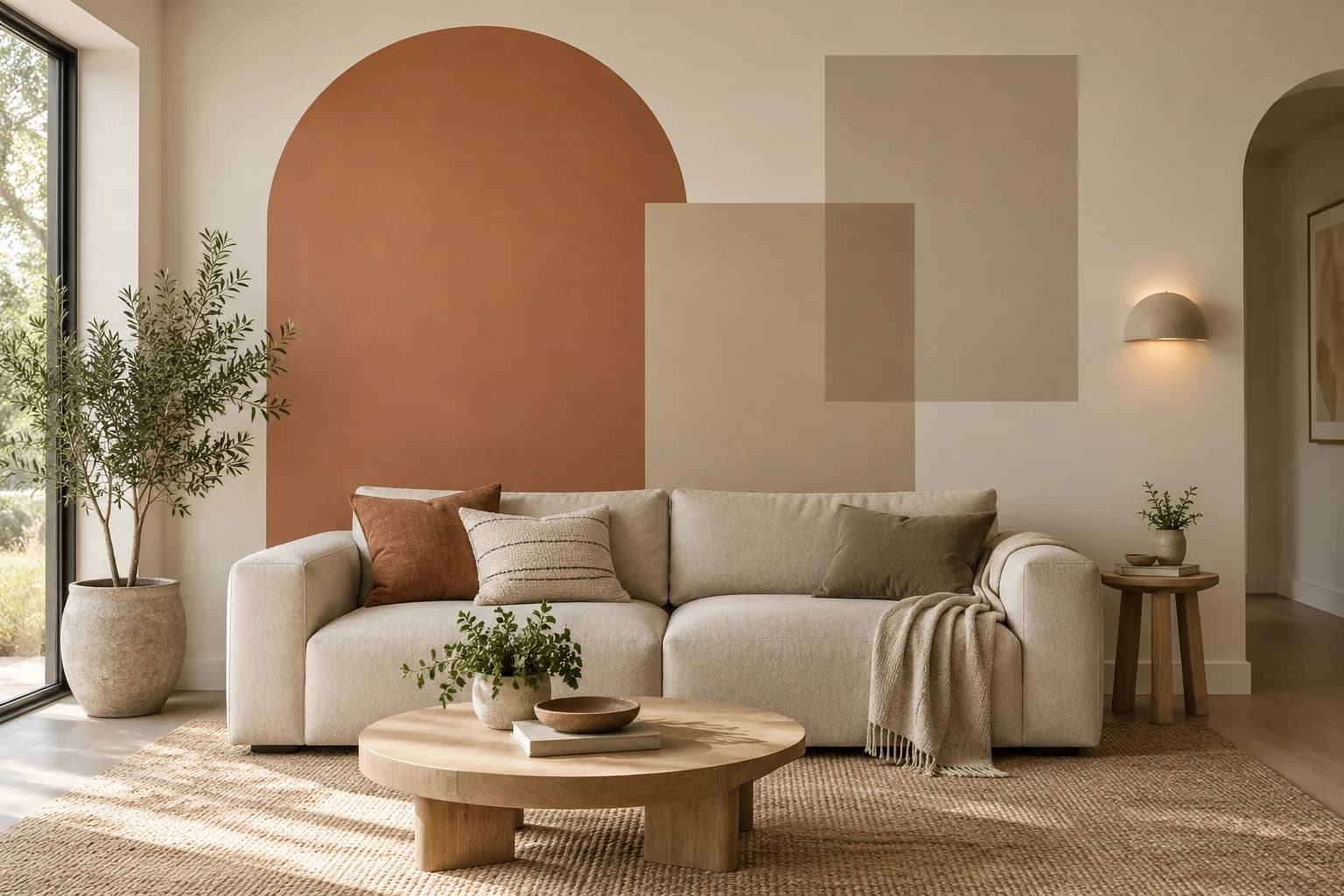
An accent wall can define a seating or sleeping area when its boundaries relate to the furniture. Consider olive green, muted blue or an earthy tone with coordinated surrounding walls. Test the colour in the actual light and view the wall from the room entrance. Its position should follow the layout, rather than being an isolated decorative decision.

3. Paint an arch or geometric shapes
A single arch or carefully proportioned rectangles can add character without installing cladding. Size the composition around the wall and furniture, and test the overlapping colours before application. Straight and curved edges require a defined layout, suitable tools and masking tape compatible with the surface. Follow the application and tape-removal instructions. Many small shapes also make later repairs more complicated.

4. Use a two-tone bedroom wall
Choose the division height with the room and furniture in mind, then check how the line continues across adjoining walls, doors and cupboards. The two colours need not divide the wall into equal halves. Try restrained sage with cream, or a sandy tone with warm white. In a child's room, select a product suited to its use and cleaning requirements; replaceable accessories can carry changing motifs.

5. Restrict stencils or decorative bands to one area
Consider a limited motif around a reading corner or above storage instead of covering every wall. Check pattern repeats and their junctions at corners and openings. Approve a full-size sample to judge the spacing. Agree how the detail can be repaired later; an intricate pattern may require a broader refresh than a small plain patch.
6. Specify a decorative paint effect
Sandy, metallic and lime-like effects depend on the coating system and application method. Request a sample of the actual product on a comparable surface and inspect it under side lighting. Decorative effects are not interchangeable with ordinary wall paint. Avoid improvised mixtures without compatible system instructions, and include the application boundaries, care and repair method in the quotation.
7. Coordinate the ceiling with the walls
Keep the ceiling restrained, or bring it into the room palette when that serves the overall design. Review its height, plasterboard edges, cornices and lighting positions before choosing a colour. A busy pattern should not substitute for assessing cracks or uneven surfaces. Coordinate openings and preceding work in a plasterboard ceiling before approving the final finish.
Choose the colour and sheen using physical samples
Daylight, artificial lighting and sheen alter the appearance of paint. Compare samples beside fixed finishes in the room at different times, rather than relying on a screen [3]. Record the approved colour code, product, finish and sample so the supply and future repairs can be discussed clearly.
Matte finishes have low reflection, while other finishes introduce varying shine. Washability and durability depend on the product, not a sheen name alone; some matte paints are washable. Check the manufacturer's recommended use and instructions, especially on frequently touched walls or surfaces exposed to moisture [2].

From inspection to handover: a painting work sequence
- Inspect and define the scope. Measure surfaces and identify walls, ceilings, decorative boundaries and repair areas. Address the cause of damp or repeated peeling before agreeing the finish.
- Approve the sample. Confirm colour, product, sheen, shapes and dimensions, and record approval under the proposed lighting.
- Protect and prepare. Protect floors and furniture, remove unsound material, clean the surface and complete the agreed repairs. Preparation must be suitable for the surface before coating begins [1].
- Specify the coating system. Agree a compatible primer and paint and the required coats according to the product and coverage. One recipe does not suit every wall.
- Set out the details. Review alignment, dimensions, arches, colour junctions and corners. Apply the decorative elements against the approved sample.
- Organise application. Follow product instructions for preparation, recoating, drying and application conditions. For an occupied room, plan access and furniture protection alongside the work sequence.
- Document handover. Compare colour, coverage and boundaries with the sample. Review inconsistent sheen, stains and application marks. Provide material records and care instructions and resolve the agreed snagging items.
What determines the cost of decorative wall painting?
Cost depends on the painted area, surface condition, repairs, coating system, colours, decorative complexity, access height and protection of the contents. Compare quotations for the same scope. Does each include the ceiling, filling, primer, samples, coats, decoration and cleaning? Identify exclusions and dates as well as materials; a low unit price may cover different work.
With a limited budget, retain sound surfaces and test the impact of refreshing one colour or a selected wall, then expand by priority. A local price needs the city, measurements and surface condition. Share photographs and a plan to establish a realistic scope before comparing options.
Common mistakes to avoid
- Choosing a paint code from a picture alone: approve a physical sample in the room.
- Painting shapes without dimensions: review a wall elevation, furniture and corners first.
- Covering a surface defect with decoration: identify the cause and repair scope before painting.
- Using sheen as a substitute for product data: check cleaning, intended use and instructions.
- Buying many colours without a scheme: review the complete layout and record approved materials.
Related guides for paint and colour decisions
- Compare paint colour mixing and samples
- Choose wall paint types for the intended use
- Coordinate bedroom plasterboard ceilings, lighting and paint
Technical references
The colour arrangements and design ideas are editorial suggestions. These references support surface preparation, sheen selection and colour review; the instructions for the actual product govern its application.
- Sherwin-Williams — How to Prep Walls for Painting
- Benjamin Moore — How to Choose a Paint Finish
- Sherwin-Williams — How Light & Finish Affect Paint Color
Start your dream project today with SMD Decoration
Your space, your vision. SMD Decoration offers interior design, fit-out and renovation in Turkey and Arab markets: homes, apartments, villas, offices, hotels, restaurants, healthcare, education and exhibitions. Reflect your identity, needs and budget.
Explore finishes, painting, upholstery, custom furniture and lighting in modern, classic, contemporary, industrial or eco-conscious styles. Agree services, execution details and handover before work.
SMD Decoration websites
- Main website: smddecoration.com
- Turkey: smddecoration.net.tr
- Oman, Kuwait & Bahrain: turkiyedecoration.com
- Qatar: smddecoration.qa
- UAE: smddecoration.ae
- Saudi Arabia: smddecoration.sa
- Saudi Arabia — additional site: smddecoration.net
- Libya: smddecoration.info
- Iraq: smddecoration.site
- Syria: smddecoration-syria.com
SMD accepts conventional currencies and bank transfers; Bitcoin and other cryptocurrencies are not accepted.
Bring your vision to life with SMD
Share the city, room dimensions, wall photographs and condition, preferred colours, budget and renovation date. Discuss paint products, sheen, samples and decorative details with SMD Decoration, with a clear scope for surface preparation, coordination, application and handover.
Email: info@smddecoration.com
Project enquiry