
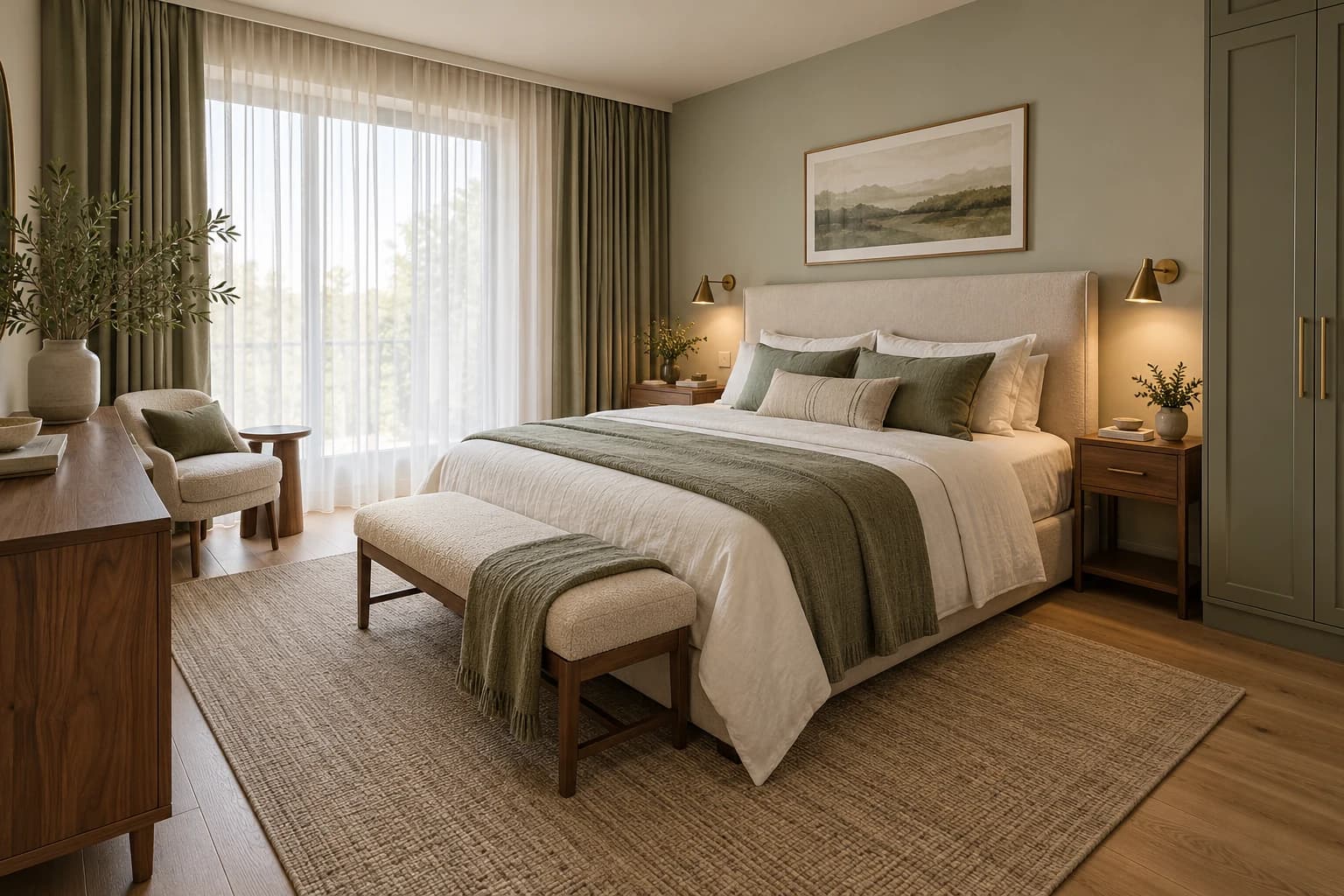
The most useful bedroom ideas address what you want to change. Improve furniture placement, coordinate walls with textiles, add suitable reading light and make storage accessible. A bedroom makeover does not require replacing everything: test each idea against room measurements, then compare materials, costs and installation needs.
Content reviewed: 12 October 2026. These ideas help you choose a design direction; dimensions and installation depend on the site, furniture and selected products.

How do you choose the right bedroom idea?
Identify one or two problems before browsing images: insufficient storage, poor reading light, awkward circulation or a tired colour scheme. Photograph the room, measure furniture you will keep and list what is difficult to use. This connects inspiration to a real need rather than a collection of unrelated purchases.
Distinguish a decorative refresh, such as textiles and accessories, from work involving joinery, electricity or painting. Before ordering a bed or wardrobe, check overall dimensions and open doors and drawers. For a complete layout review, see the bedroom design and furniture planning guide in Arabic. This article focuses on refresh ideas and choosing alternatives.
10 practical bedroom décor ideas
1. Give the headboard a clear role
An upholstered headboard, a painted feature wall or a limited timber treatment can bring the room together visually. Choose one direction and coordinate its width with the bed and bedside furniture. Covering the whole wall is optional; a proportionate headboard or defined painted area may suit a compact room better.
Locate sockets, switches and reading lights before approving the design. Examine fabric texture and cleaning instructions. For bespoke joinery, request an elevation, dimensions, edge details and fixing information. Keep access to services that may need maintenance behind the finish.
2. Build the colour scheme around retained pieces
Start with the floor, existing wardrobe and bed, then choose wall paint, upholstery and curtains. Beige, creamy white and timber can form a restrained base, while green, blue or an earthy accent adds a personal choice. Dark colours can also work if you like them: test them with actual light and materials rather than treating them as universally right or wrong.
Place paint, fabric and timber samples together in daylight and evening lighting. Review sheen and reflections; a phone image is insufficient for approval. No colour guarantees sleep quality or a health outcome. For preparing paint samples, see the paint colour mixing guide in Arabic.
3. Separate reading light from general illumination
A bedside reading light adds a clear function without lighting the entire room. Choose its position and direction for the user, then test it while sitting and lying down. Coordinate it with the headboard and table. A visible light source can cause glare from the bed even when the room looks attractive from its entrance.
Plan controls and sockets before fitting the headboard or applying final paint. If dimming is required, confirm compatibility between the light, driver and control. ERCO’s residential lighting reference discusses combining general and directed light. It is manufacturer guidance, not a local requirement for one light colour or illuminance in every bedroom.

4. Choose bedside furniture for the way you use it
A narrow table or a carefully fixed shelf may be sufficient for a phone, book and light. List what it must hold, then compare depth and height with the bed. Check the opening space for any drawer. For a shelf, review edges, loading and the fixing method with the supplier.
Wall mounting is not automatically the best solution because it looks visually light. The wall and product determine suitable fixings. The two sides do not have to match: one can support reading while the other offers different storage if the users and available space benefit.
5. Add a compact desk only if it works in use
A bedroom desk can be useful, but test it with the chair pulled out while retaining access to the bed and wardrobe. Plan the screen, sockets and task lighting; avoid reflections from windows or lamps on the screen. The desk’s footprint when closed does not establish whether it fits during work.
A simple desk with limited drawers or a folding surface may suit the need and product. Provide appropriate task light: dim ambient lighting alone is unsuitable as a general solution for working or reading. If the desk compromises essential functions, consider another location instead of overloading the room.

6. Make storage organised and reachable
Separate hanging clothes, folded items, shoes and seasonal bedding. Suitable internal compartments may improve an existing wardrobe without replacing it. Test every drawer and door, and keep frequently used items accessible. More shelves are not useful if you cannot reach or operate them.
Under-bed storage needs drawer extension or operating space for its mechanism. Sliding doors require a suitable track and adjustment and limit access to the full wardrobe width at one time. Request carcass, edge, hardware and finish details rather than relying on “luxury wood”. Review furniture anchoring instructions with the installer.

7. Choose curtains for privacy and light control
A sheer layer combined with a light-blocking layer may support different needs during the day. Define the privacy level first, then examine fabric, controls and the track position. Curtains should not obstruct window operation, air conditioning or cleaning access.
Measure the track and space for gathered fabric. Check removal, cleaning and motor access if applicable. Review bedroom curtain ideas in Arabic, then examine a sample in your room. Curtains manage light and visual privacy; they do not guarantee complete sound insulation.
8. Use timber and textiles selectively
Timber on bedside furniture or a headboard can connect existing and new pieces. Bedding, a rug and curtains offer different textures. Choose a limited group of coordinated materials and review samples together so that finishes support rather than compete with one another.
Compare cleaning requirements, durability and edges. Test rug placement with the bed and bedside furniture and review loose edges. “Natural” alone does not establish product suitability: examine its type, finish, instructions and available local maintenance support.
9. Add personality without clutter
A proportionate artwork, properly fixed mirror or ceramic object can offer more character than a crowded collection of accessories. For a bohemian direction, woven fabrics, varied colours and textures can be combined around a clear common theme. Choose pieces you enjoy and retain the surfaces needed for daily use.
Position a mirror to reflect a desirable view rather than assuming it enlarges the room’s physical area. In small rooms, begin by removing unused pieces. Compare small bedroom ideas in Arabic, then test each option on your plan.

10. Test an alternative before buying
Photograph the room and assemble a compact board of paint, timber and textile samples. Mark furniture outlines on the floor if useful, then test movement, wardrobe doors and windows. Compare two options instead of approving the first appealing picture. A refresh may come from textiles, lighting and placement while retaining good furniture.
A visual study communicates the design direction, but it does not establish dimensions or installation details. For joinery, electrical changes or ceiling work, request suitable drawings and details. Unusual suspended beds or structural features require specialist design and installation rather than copying an inspiration image.
What should you refresh first?
| Goal | Idea to start with | Check before approval |
|---|---|---|
| A different overall appearance | Coordinated paint, headboard and textiles | Samples with the existing floor and light |
| Reading in bed | Directed light and reachable controls | Glare, sockets and dimming compatibility |
| Usable storage | Wardrobe compartments or under-bed storage | Doors, drawers and operating space |
| A compact room | Proportionate furniture and fewer unused pieces | Movement, windows, air conditioning and chair use |
A bedroom makeover plan with a defined budget
Separate retained furniture, upholstery or painting, new joinery, lighting and electrical work, curtains, delivery and installation. Compare quotations using the same specifications and identify existing-surface repairs, supply and waste removal. No fixed price applies to every room or country: dimensions, products, scope and availability affect a quotation.
In Saudi Arabia, the Gulf, Türkiye, Syria or Libya, check the actual building and local product and installation support before transferring an idea from another market. Confirm delivery routes and work hours with building management. The market websites in the closing section help you start a conversation; location-specific service scope is agreed in the proposal.
| Stage | Decision needed | Record to retain |
|---|---|---|
| Before purchase | Layout and full product dimensions | Plan and product list |
| Before manufacture | Materials, headboard and sockets | Approved samples and details |
| Before installation | Final measurements and site access | Dimensions, dates and responsibilities |
| At handover | Operation of furniture, lights and curtains | Issues and cleaning and maintenance instructions |
Turn your idea into a plan with SMD Decoration
Share the city, room dimensions, photographs, furniture to retain and initial budget. Select a few ideas that address your goal, then discuss furniture placement, materials, lighting and design deliverables with SMD Decoration. Approving an option, samples and scope before installation makes comparison, coordination and handover clearer.
Start your dream project today with SMD Decoration
Your space, your vision. SMD Decoration offers interior design, fit-out and renovation in Turkey and Arab markets: homes, apartments, villas, offices, hotels, restaurants, healthcare, education and exhibitions. Reflect your identity, needs and budget.
Explore finishes, painting, upholstery, custom furniture and lighting in modern, classic, contemporary, industrial or eco-conscious styles. Agree services, execution details and handover before work.
SMD Decoration websites
- Main website: smddecoration.com
- Turkey: smddecoration.net.tr
- Oman, Kuwait & Bahrain: turkiyedecoration.com
- Qatar: smddecoration.qa
- UAE: smddecoration.ae
- Saudi Arabia: smddecoration.sa
- Saudi Arabia — additional site: smddecoration.net
- Libya: smddecoration.info
- Iraq: smddecoration.site
- Syria: smddecoration-syria.com
SMD accepts conventional currencies and bank transfers; Bitcoin and other cryptocurrencies are not accepted.
Bring your vision to life with SMD
Share your city, bedroom dimensions and photographs, furniture to retain, the changes you want and your initial budget. Discuss suitable ideas, materials and lighting, and agree design deliverables, supply and installation scope, coordination responsibilities and handover before starting.
Email: info@smddecoration.com
Project enquiry