
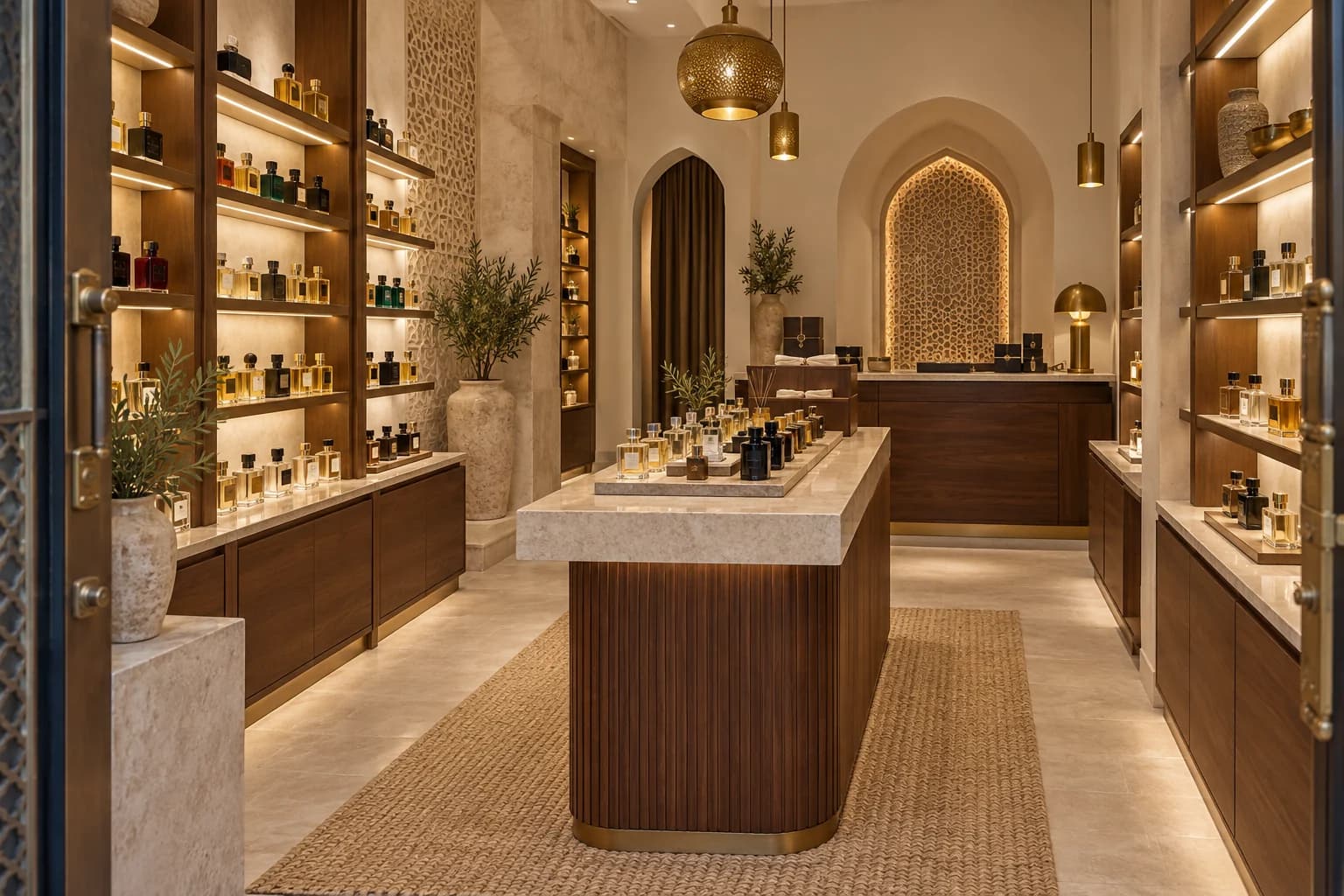
The cost of fitting out a perfume shop in Libya depends on the unit’s condition, shopfront, display units, services and agreed specifications. Build it from measured quantities and dated comparable quotations, then separate product stock and opening expenses. This guide does not assume a Libyan square-metre price or predict future costs.
A street shop in Tripoli, a unit in a Benghazi commercial centre and a new branch in Misrata may need different arrangements. Start with how customers discover, test and purchase the products, then coordinate display, stock and gift wrapping. Prepared in October 2026, the guide supports 2027 planning rather than sales or payback promises.
Define the retail offer and review the premises
Clarify whether the shop serves one brand, several brands, packaged perfumes, gifts, oud or other products. Establish actual activities locally before adding blending, refilling or demonstrations that may need different equipment and approvals. Prepare example bottle sizes, product categories and intended display density.
Obtain measured dimensions, heights, columns, entrance and service information. Record existing finishes that can remain after review and items needing investigation. A letting advertisement is not an electrical-capacity or building-condition report.
For a mall or shared building, request current written shopfront, signage, delivery, working-hour and service conditions. Where no complete handbook exists, obtain answers to a clear question register before pricing. Landlord acceptance does not replace locally required activity or project approvals.
Plan a customer journey around the actual bottles
Test what a customer sees at the entrance, where consultation and testing happen, and how payment and wrapping follow. A large island is optional, not a requirement of luxury. Draw customers, bags and staff replenishment rather than only empty aisles.
Build a sample shelf using the real product range. Check depth, height, labels, reflections and removal without hitting neighbouring bottles. Identify packaged stock, testers, accessories and any required locks or protection. If ranges change often, consider adjustable displays without untidy holes or exposed cables.

Approve joinery, materials and lighting together
Request a representative sample of finish, glass, metal, fittings and integrated lighting. Inspect edges, junctions, drawers, stability and access to replace a light source or driver. Keep its code, photograph and approval so it remains a handover reference.
Describe materials precisely: veneer versus a printed effect, coated metal versus solid metal, and the approved glass and fixing details. Labels such as “VIP” or “super luxury” cannot replace a measurable specification. Price each unit’s components and the interfaces between the joiner and electrician.
ERCO’s shelf-lighting guidance describes uniform vertical illumination as one way to give shelf levels consistent prominence. Treat it as a design option, not a mandatory recipe. Test the chosen lights on clear and dark bottles from customer viewing positions, checking glare, labels and maintenance access.
Keep testing, storage and wrapping practical
Agree the testing method, open products, sample tools and disposal arrangements with the operator. Follow product supplier guidance on display, storage and safety. Do not introduce scent diffusion, heat or ignition sources merely because they seem relevant to perfume retail. Additional activities need their own review.
Allocate stock and packaging so staff can replenish without blocking customers. Preserve access to service panels and air-conditioning rather than filling every gap with boxes. Ask suppliers for the actual storage conditions required by the products; one generic temperature or ventilation statement does not cover every range.
Rehearse a gift purchase from selection to bottle retrieval, wrapping, payment and bag handover. Size the counter around the real process and number of staff. Coordinate payment equipment, network and cable routes before fabrication. Wrapping may share the counter or occupy a separate area depending on the property and workload.

Coordinate services and build a transparent budget
Collect data for lighting, displays, screens, network, cooling and other equipment. Qualified specialists should design loads, protection and connection routes. Coordinate air outlets, ceilings and maintenance access with tall display units, and identify landlord and tenant responsibilities.
Separate design and fixed works from perfume stock, testers, packaging, payment equipment and opening or operating costs. Keep all packages visible in the owner’s assessment without calling the contractor’s figure the total business budget.
Measure preparation, finishes, shopfront, joinery, lighting, services and tests. For example, eight display units do not have one meaningful unit price if their dimensions, glass, finish and lighting differ. Group repeated units and bespoke items by the same approved drawings; quantity multiplied by an agreed unit rate explains an item, not an unverified market price.

Compare sourcing through installation and handover
For local and imported options compare specification, sample, confirmed dimensions, lead time, transport, protection, assembly, installation, warranty and maintenance. Neither local manufacture nor import is automatically better. A converted foreign factory price is not a complete Libyan installed quotation.
Confirm who measures and who bears adjustment responsibility if dimensions change. Record each alternative’s product, sample, reason and effect on appearance, connections, price and time before purchase. Update the affected drawings and quantities.
Keep a flexible seasonal display area with planned holders and any safe permanent connections, rather than improvising above customer routes. Retain drawings and samples so future units can match. A reusable identity can support later planning, but it does not establish that expansion is commercially justified.
Accept a functioning store, not just a photograph
Check doors, drawers, locks, lighting, network, glass, edges and unit stability. Arrange qualified technical tests and rehearse display, consultation, payment and wrapping with real products. List defects with locations, owners and closure evidence.
Hand over finish and light-source codes, supplier contacts, warranty information, final drawings and operating and maintenance instructions. An illustrative focused-range shop might need less shelf density, a small flexible display, workable wrapping and clear storage. That is a planning scenario, not a prescribed floor area or proof that fewer products sell better.
Send SMD Decoration the city and property type, plans, photographs, brand identity, range, bottle examples, landlord conditions, budget and target date. Ask for a clear design, joinery, services and equipment scope, with the actual local measurement, supervision and implementation arrangements confirmed before agreement.
Start your dream project today with SMD Decoration
Your space, your vision. SMD Decoration offers interior design, fit-out and renovation in Turkey and Arab markets: homes, apartments, villas, offices, hotels, restaurants, healthcare, education and exhibitions. Reflect your identity, needs and budget.
Explore finishes, painting, upholstery, custom furniture and lighting in modern, classic, contemporary, industrial or eco-conscious styles. Agree services, execution details and handover before work.
SMD Decoration websites
- Main website: smddecoration.com
- Turkey: smddecoration.net.tr
- Oman, Kuwait & Bahrain: turkiyedecoration.com
- Qatar: smddecoration.qa
- UAE: smddecoration.ae
- Saudi Arabia: smddecoration.sa
- Saudi Arabia — additional site: smddecoration.net
- Libya: smddecoration.info
- Iraq: smddecoration.site
- Syria: smddecoration-syria.com
Bring your vision to life with SMD
Send the city, property type, plans, photographs, brand identity, product range, bottle sizes and budget. Discuss displays, joinery, lighting, wrapping, storage and quantities, and confirm the service and local implementation scope for your project.