
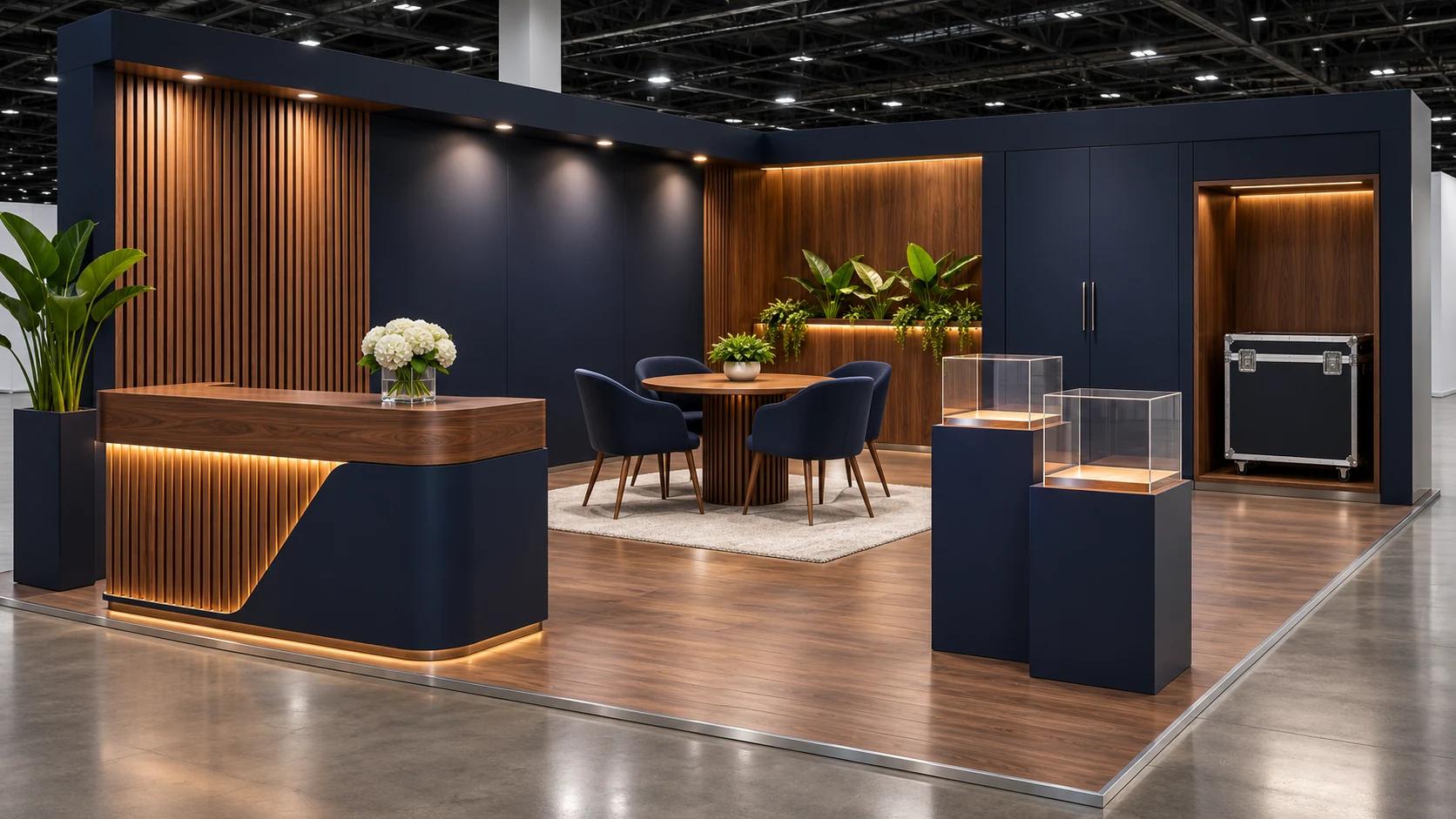
Choose an exhibition stand company by how clearly it translates your participation objective into deliverables, responsibilities and a handover programme. Prepare one brief, compare materials and quantities on the same basis, control approvals and agree what happens after the event. Use this guide to discuss a defined, assessable project scope with SMD.
Choose a partner that makes the participation decision clearer
Attractive booth images and different quotation totals do not explain everything you are buying. Which materials and components are included? Who provides the screen? Does transport reach the delivery point you need? Who coordinates when your team arrives at the hall? These questions connect the visual proposal to a stand that can actually be inspected and handed over.
Define the outcome you need from the partner: design only, design documentation, specified manufacture and preparation, or a wider package including installation and dismantling where available and agreed. Review SMD's commercial-space services to frame the initial conversation, then establish your actual stand requirements in the project offer.
Give every shortlisted company the same brief
Different inputs produce offers that are difficult to compare. Prepare one file with the event and edition, hall and city, stand plan and number, dimensions, open sides, products, brand assets, screens, meeting needs and storage requirements.
Attach the exhibitor manual and the dates available for approvals, installation, handover and dismantling. Explain what the organiser already provides under the booking, the requested scope, and the budget and currency if known. Suppliers can then propose meaningful alternatives, such as another finish, hired equipment or a simpler secondary feature, instead of reducing the price by omitting an unrecognised task.

Assess relevant work by asking what the example proves
When reviewing a portfolio, identify the basis of comparison: design language, product type, stand area, manufacture, or installation scope. An image alone does not establish that the company delivered your required service in the same city or event. Ask what role it held and which part of the assignment the example represents.
Review SMD's published projects, then ask for relevant examples or an explanation of suitable deliverables. Look for a way of addressing details, presentation quality and responsibility boundaries. Discuss a new proposal as a concept requiring approval and development; it is not automatically a previous project or an organiser-approved design.
Put the offers into one schedule before comparing totals
Create a schedule covering item, specification, quantity, unit, ownership and inclusion status for each offer. Turn missing information into precise questions and send a consolidated clarification list. Negotiation then concerns defined elements, and the reasons behind price differences become easier to understand.
| Comparison item | What the offer should establish | Question to resolve a gap |
|---|---|---|
| Design and revisions | Defined deliverables and review rounds | What is delivered and approved before production? |
| Structure and finishes | Materials, quantities and fabrication scope | Can the alternatives be compared from this description? |
| Graphics and print | Files, areas and approval process | Who prepares artwork and approves the sample? |
| Furniture and screens | Quantity, specification and rental or purchase | What operation and delivery are included? |
| Transport and installation | Location, working windows and responsibilities | Where does the delivery obligation begin and end? |
| Venue services | Included, excluded or awaiting a price | Who orders and pays for each service? |
| Dismantling and packing | Return and delivery scope | What do I own after the event, and where is it kept? |
Distinguish a known price from a pending item
An offer may correctly price its written scope while leaving part of your needs outside it. Review exclusions as carefully as inclusions. If handling, a service order or an artwork alteration has not been priced, mark it as pending. A blank field does not mean zero when adding the budget or selecting the lowest total.
Ask for currency, applicable tax treatment, price validity and payment and supply terms. For offers in different currencies, choose a dated exchange-rate reference for internal comparison only. Keep the original offer amounts visible. Do not treat renting an item for one event as equivalent to owning it with transport, maintenance and storage obligations between events.
Approve materials and files before manufacture
Agree which samples or mock-ups are needed: print colour, surface finish, textile or panel type, product presentation and screen content. Some decisions can be documented in a file; others need a physical sample or partial assembly. Choose a review method appropriate to the item's value and effect on the final presentation.
Use SMD's guide to exhibition stand colours and identity to frame questions about print, material and light. Record the approver, file revision and approval date. If files change after production starts, agree the implications before using them so teams do not work from competing versions.

Define responsibilities with the venue and organiser
Design, manufacture and venue services interact, but the responsible party for each task must be identifiable. Ask who supplies drawings, checks event requirements, orders services, receives materials and handles installation comments. A broad statement that everything is included needs a practical list of tasks and outputs.
If engineering coordination is needed, discuss SMD's architectural and engineering consulting scope and identify work requiring a local party or specialist review. Check the actual event and venue requirements: they can differ even between events at the same site. Approval or permitted dimensions from an earlier project do not automatically transfer to your new participation.
A worked example: similar totals with different obligations
Imagine comparing two offers for the same stand. Offer A includes a hired screen, installation and dismantling, but excludes product transport and venue services. Offer B includes delivery to a stated point, but leaves the screen and post-event packing unclear. Neither can be called the better financial choice until those gaps and delivery boundaries are aligned.
Request revised offers based on the same brief, and place the confirmed items in one comparison. This is a hypothetical purchasing example, not a SMD offer or market-price claim. It may reveal that the main difference concerns responsibility or ownership rather than the apparent luxury of the external design.
Manage changes before they affect the programme
Use a simple change request with a description, affected item, reason, cost and time implications, and named approver. A change may be useful, but instructing it before resolving its effects can disrupt fabrication, print or transport. Maintain one approval record instead of scattered instructions.
Review meaningful milestones: concept approval, file release, material availability, component preparation, arrival and installation. Ask for evidence tied to the current item, such as a specific sample image or component status. General progress photographs may not establish which part is complete. This lets the decision-maker intervene when needed without managing every workshop detail.
Inspect the stand against an agreed handover list
At handover, compare what you bought with what is present: component counts, approved materials and graphics, identity clarity, specialist-reviewed display stability, agreed screens and services, storage, furniture and cleanliness. Record each outstanding item, responsible party and agreed resolution time. Confirm what is ready for the exhibition team.
Also define the event contact and agreed support boundaries. If managing remotely, request clear views of each frontage and zone plus a handover list linked to scope. Photographs support documentation and communication; they do not replace required technical inspections.
After the event, collect team observations: which samples were hard to reach, where a discussion needed more space or quiet, and which items were unused. Keep these notes with inventories, condition records and approved files. They can inform the next participation rather than trigger repeat purchases without an operating review. Commercial outcomes need your actual sales and follow-up data, separately from this fit-out review.

Plan the post-event arrangements before agreement
Will you retain the structure, receive specific components or return hired items? Who packs and transports them, and to which destination? Establish these terms early, particularly if reuse is planned. The next booked area, component condition, graphic alterations and storage costs affect that decision.
Review the full project journey in SMD's exhibition stand design guide. Then send SMD your stand brief, plan, exhibitor manual and participation objective. Request an offer that explains outputs, quantities, exclusions, approvals and handover. This gives both sides a clear basis for evaluating a proposal suited to the project.

Start your dream project today with SMD Decoration
Your space, your vision. SMD Decoration offers interior design, fit-out and renovation in Turkey and Arab markets: homes, apartments, villas, offices, hotels, restaurants, healthcare, education and exhibitions. Reflect your identity, needs and budget.
Explore finishes, painting, upholstery, custom furniture and lighting in modern, classic, contemporary, industrial or eco-conscious styles. Agree services, execution details and handover before work.
SMD Decoration websites
- Main website: smddecoration.com
- Turkey: smddecoration.net.tr
- Oman, Kuwait & Bahrain: turkiyedecoration.com
- Qatar: smddecoration.qa
- UAE: smddecoration.ae
- Saudi Arabia: smddecoration.sa
- Saudi Arabia — additional site: smddecoration.net
- Libya: smddecoration.info
- Iraq: smddecoration.site
- Syria: smddecoration-syria.com
Bring your vision to life with SMD
Send the event, city, hall, booked plan, exhibitor manual, brand files, products, equipment, dates, budget and currency. We can discuss the participation objective, design and preparation deliverables, venue-service and production responsibilities, logistics, installation, dismantling and the execution arrangements available for the project before agreement.