
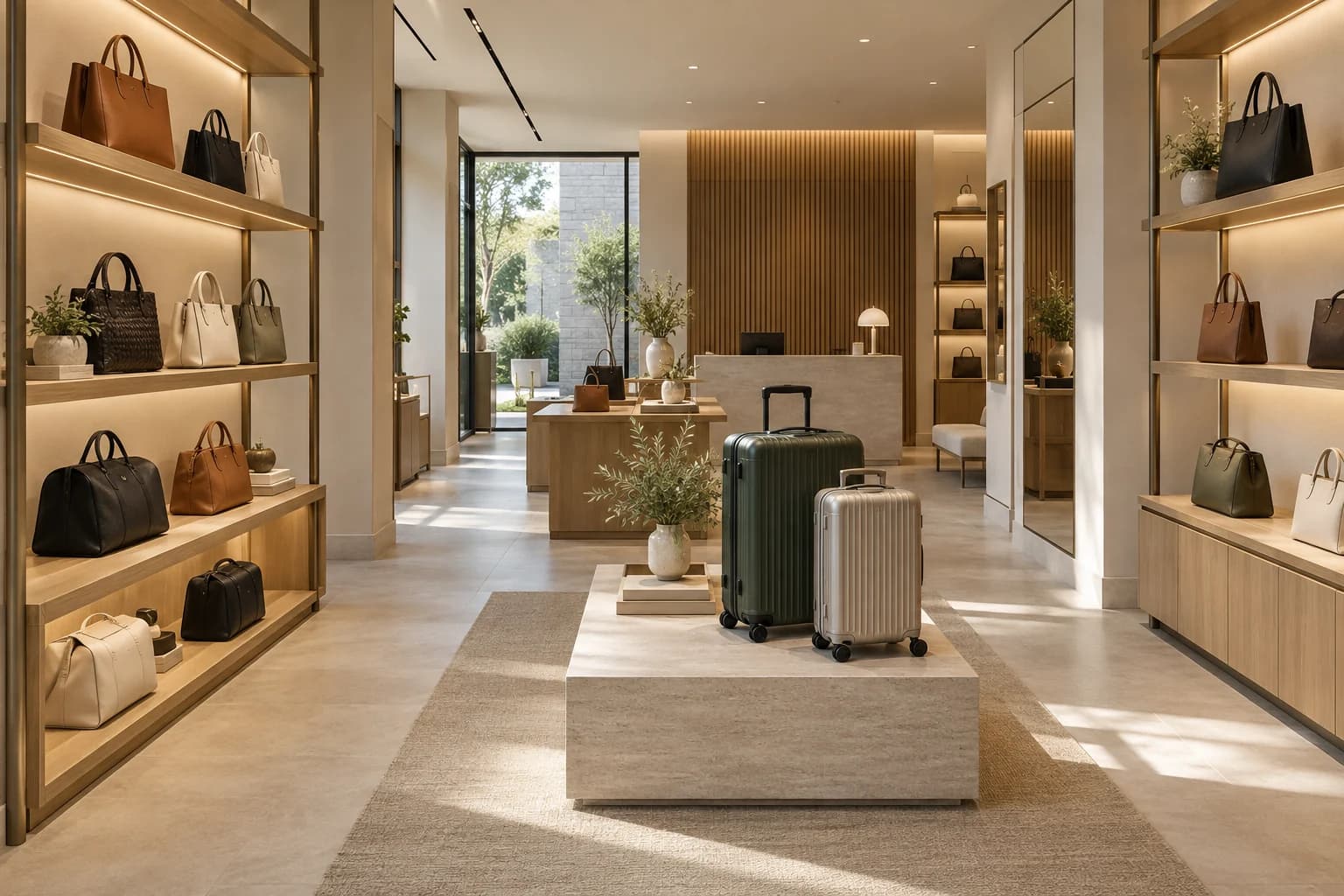
Start a bag shop interior by defining the products, dimensions and ways customers will inspect them, then plan displays, checkout and storage on a measured layout. Handbags need room for their shape and handles; luggage needs space for comparison and opening. Coordinate lighting, frontage and materials with the store identity, and compare fit-out prices against clear quantities and specifications.
Whether you are opening a handbag boutique or a store combining luggage, backpacks and accessories, this guide connects attractive displays with everyday operation. Images, a fixture comparison and installation checks help turn an idea into a brief. Design supports the shopping experience; sales also depend on products, prices, location and management.
Define the bag assortment before designing shelves
Group the actual assortment into handbags, shoulder bags, backpacks, luggage, wallets and accessories. Record representative dimensions, display quantities, reserve stock and seasonal changes. A layout based only on the smallest bag may not accommodate tall handles or large travel cases.
Define how a customer compares each item: holding a handbag at a mirror, inspecting material and zips, or opening a suitcase and trying its handle and wheels. Translate those steps into display-surface and space requirements. Test the largest products in a physical shelf mock-up before approving cabinetry and procurement.
How do you lay out a small bag shop?
Use the perimeter for organised displays, then test whether a low central table is useful. Keep the route from entrance to products and checkout clear, with practical staff access to reserve stock. Compare a perimeter-only option with one including a central unit, using actual room and product dimensions.
Review doors, columns, payment queues and open drawers on the plan. More shelves do not improve presentation if they conceal products or make movement difficult. Identify displayed and stored quantities, and check accessibility, exits and landlord conditions against the project location.
Make a new collection identifiable from the entrance, and organise other products by category, use or collection. Simple category signs can assist selection when suited to the store. Allow room for comparison and review sightlines from standing and any seated mirror position.

Handbag shelves: show shape, handles and material
Set shelf spacing from bag dimensions including handles, with room to lift and replace the product. Adjustable shelves may suit a changing assortment; review supports, loads and fixing with the supplier and specialist. Avoid selecting one depth or height without representative samples.
Use a support or surface suited to the product and its supplier’s instructions. Hang bags only where the product and accessories suit that method. Keep the principal face, handle and information visible without crowding. Test the shelf background and lighting with light and dark bags, separating reserve stock from the display.

Luggage displays: space to compare and open cases
Distinguish travel cases from smaller bag displays. Place selected sizes on accessible platforms or a suitable floor area, with space to inspect interiors, open the case and extend the handle. Rehearse the customer’s experience using real luggage beside a staff member and review movement with the case open.
Arrange sizes and colours for easy comparison, with duplicates stored under a clear stock plan. Review platform stability and high-level access with the supplier. Avoid an arrangement in which removing one case requires shifting a whole group. Adjustable fixtures are useful where the assortment and dimensions change.

Which display fixtures suit a bag store?
Wall shelves serve a repeating assortment, low tables support inspection or a featured group, and platforms can accommodate larger items. Combine fixture types through a consistent visual language and a clear route. Assess each unit against its role, product dimensions and replenishment method.
Review edges, handles, fixing, loading, cleaning and storage doors. Request drawings, samples or a mock-up where needed before full production. Assign review of fixing and electrical work where lighting is integrated. Useful detailing connects appearance with repeated everyday use.
Comparing bag display fixtures
| Fixture | Possible use | Check before approval |
|---|---|---|
| Adjustable wall shelf | Handbags, backpacks and collections | Product size, access and stability |
| Low display table | Featured group or product comparison | Circulation and product inspection |
| Suitable stand or hook | Products appropriate for hanging | Product instructions, support and loads |
| Luggage platform | Different travel-case sizes | Removal, opening and circulation |
| Closed storage | Stock, shopping bags and packaging | Actual capacity and staff access |
Bag shop lighting: reveal colour and texture
Combine general circulation lighting with directed light for products and featured collections. Test colour, stitching and texture on leather, textile and glossy samples from the customer’s position. Review shelf shadows and glare in glass and metal before installing luminaires.
Discuss aiming, colour appearance, control and maintenance with the designer and supplier. Shelf lighting requires coordination with cabinetry, wiring and maintenance access. Select specifications around the display; a shelf photographed beautifully does not demonstrate that every bag will be clearly presented under the proposed light.
Frontage, brand identity and colours
Connect signage, window, counter and shelves through materials and a palette suited to the business identity. A restrained background may help a colourful assortment stand out, while a dark background also needs testing with dark bags. Compare physical samples beside products under proposed lighting.
Plan a window display with selected items that can be changed, keeping the entrance, cleaning and maintenance accessible. Review daytime reflections, evening visibility, signage requirements and landlord conditions. Avoid a display that conceals all sightlines or makes arrival difficult.
Checkout, packaging and stock: organise staff work
Define space for payment, packaging, shopping bags and any return or inspection procedure. Make the staff route between service, reserve stock and counter practical. Coordinate devices, sockets and storage so cables do not cross circulation. Test packaging of the largest item sold before approving the worktop.
Plan stock-location codes linked to display categories, separating reserve units from featured items. Locate large or heavy luggage according to handling arrangements. The interior supports organisation; management establishes inventory, security, receiving and product-handling procedures.
Materials and joinery: samples before procurement
Choose surfaces for use, cleaning and repeated contact with products, reviewing scratches, stains and joints against supplier data and samples. Test shelf edges and supports with bags, and coordinate glass, metal and fixture stability with the specialist. Both open and closed units need accessible maintenance and cleaning.
Specify surface type, colour, finish, unit dimensions, fixing and accessories. Descriptions such as timber-look or gold alone do not allow quotations to be compared. Retain approved samples, drawings and dates so delivered and installed work can be checked against the same reference.
How much does a bag shop fit-out cost?
Cost varies with the city, area, existing condition, fixtures, materials, lighting, frontage, storage and services. A handbag boutique differs from a luggage store with larger platforms and units. Provide a plan and fixture schedule for a useful scope-based estimate.
Request separate items for design, finishes, flooring, joinery, glass, metal, lighting, electrical work, signage, installation and delivery. Compare quantities, dimensions, inclusions, exclusions, warranty, maintenance and applicable taxes. Account for procurement and downtime in an operating shop, recording the price and programme effects of changes.
Installation and handover before stocking the shop
Approve the assortment, layout and fixtures, then coordinate joinery, lighting, services and frontage. Test a shelf, platform and packaging area with actual samples. Review drawings and lead times before production, and sequence installation to protect surfaces and goods, including a place to receive and store merchandise during works.
At handover, rehearse a full visit, stock retrieval and packaging. Check shelf stability, drawers, visible handles, lighting, glare and maintenance access. Ask the responsible specialists to test services, and record defects, completion dates, product instructions and warranties before opening.
Information for a clear fit-out quotation
- Project city, measured plan, frontage and interior photographs.
- Bag categories, largest product dimensions and displayed quantities.
- Reserve stock, inspection, packaging and customer service arrangements.
- Services, retained elements and property requirements.
- Budget, programme, materials, store identity and display-change needs.
Related guides for commercial fit-outs
Lighting reference and its scope
ERCO’s fashion-store reference discusses directed lighting and adapting displays. It informs a review with the lighting specialist; bag-store fixtures still depend on the actual products and plan. Layout, storage, cost and handover guidance here is SMD Decoration’s proposed practice adapted to the project. Source reviewed on 11 October 2026.
Start your dream project today with SMD Decoration
Your space, your vision. SMD Decoration offers interior design, fit-out and renovation in Turkey and Arab markets: homes, apartments, villas, offices, hotels, restaurants, healthcare, education and exhibitions. Reflect your identity, needs and budget.
Explore finishes, painting, upholstery, custom furniture and lighting in modern, classic, contemporary, industrial or eco-conscious styles. Agree services, execution details and handover before work.
SMD Decoration websites
- Main website: smddecoration.com
- Turkey: smddecoration.net.tr
- Oman, Kuwait & Bahrain: turkiyedecoration.com
- Qatar: smddecoration.qa
- UAE: smddecoration.ae
- Saudi Arabia: smddecoration.sa
- Saudi Arabia — additional site: smddecoration.net
- Libya: smddecoration.info
- Iraq: smddecoration.site
- Syria: smddecoration-syria.com
SMD accepts conventional currencies and bank transfers; Bitcoin and other cryptocurrencies are not accepted.
Bring your vision to life with SMD
Send the city, measured plan, store photographs, bag assortment, product dimensions, display and stock requirements, budget and programme. Discuss a design with SMD Decoration that coordinates shelving, lighting, frontage, packaging and storage within a clear fit-out and handover scope.
Email: info@smddecoration.com
Project enquiry