
Prepared by SMD Decoration · Content and images reviewed: 9 October 2026
Office interior design organises workstations, meetings, circulation and storage, then coordinates furniture, lighting and finishes around the team’s activities. Start with tasks, occupancy and privacy needs to develop a plan that can be built and maintained. Choose the visual style once function and budget are clear: a photograph alone cannot establish whether an office suits daily work.
How do you start an office design plan?
Document the premises and the work before selecting colours or ordering furniture. A client reception office has different needs from a team making frequent calls or handling confidential files. Record simultaneous occupancy, visitors, meeting patterns, equipment, records and planned team growth. These are project inputs, rather than fixed numbers suitable for every company.
- Measure the premises: record dimensions, columns, doors, windows, ceiling height and existing services.
- Define the space programme: reception, workstations, meetings, individual focus, storage and support areas.
- Map relationships: place cooperating functions appropriately and review busy or noisy activities near concentration work.
- Test layout alternatives: compare capacity, privacy, circulation and future changes in more than one plan.
- Coordinate services: review power, data, ventilation, cooling and lighting with specialists before approving ceilings and partitions.
- Agree the delivery scope: document materials, quantities, responsibilities, schedule and handover.


Open, enclosed or mixed office layout?
The table compares planning options by work requirements. A mixed layout can combine shared workstations with focus and meeting rooms. Test whether those rooms can accommodate peak demand. GSA guidance considers activity zoning and speech privacy as part of acoustic planning [4, 5].
| Layout | When to consider it | What to verify |
|---|---|---|
| Open | Frequent collaboration and changing team arrangements | Distraction sources and access to call and focus rooms |
| Enclosed | Interviews and tasks requiring privacy | Lighting, services, room isolation and use of floor area |
| Mixed | Collaboration and individual work in one workplace | Room capacity, booking arrangements and access |
How should staff, management and meeting areas be organised?
Size each area for its tasks, equipment and actual visitors. A management office depends on meeting, storage and interview needs; it does not automatically have to be the largest room. Separate visitor reception from internal work circulation when needed, and plan waiting areas so doors and chairs can move without blocking routes.
Test the plan using actual furniture dimensions, including open drawers, doors and pulled-out chairs. Have specialists review accessible circulation and exit arrangements against local requirements. For records storage, identify file volumes, weights and access before designing shelving. Establish secure storage for sensitive documents and responsibility for checking loads when necessary.


How do you choose workstation furniture and lighting?
Test chair adjustment and user fit, screen position and access to frequently used tools. Review back support, legroom and chair-to-desk compatibility using the OSHA workstation evaluation checklist [1]. Appearance or chair material alone does not establish suitability.
Coordinate daylight and electric lighting while controlling screen reflections. Review screen orientation, blinds, glossy surfaces and lighting during working hours [2]. This guide does not prescribe one window distance for every desk: the solution depends on window orientation, room depth and the task.


What is the difference between sound absorption and room isolation?
Absorption limits reflections within a space; isolation limits transmission between spaces. Meeting privacy involves partition, door, opening and service details, with absorptive finishes where needed [4]. Glass, gypsum or carpet alone does not guarantee privacy. Define the objective, request product performance information and installation details, and agree verification after completion.
How do you select floors, ceilings and walls?
- Floors: compare durability, cleaning, maintenance, chair movement and replacement of damaged areas, as well as appearance.
- Ceilings: coordinate lighting, services and maintenance access; specify any required acoustic performance.
- Walls and partitions: consider privacy, transparency, lighting, doors and connections before choosing the system and finish.
- Colours: assess samples under the office’s actual lighting. A dark colour alone does not establish reduced creativity; consider reflection, contrast, identity and preferences.


How do you control the budget and review handover?
Request an itemised proposal separating design, furniture, finishes, services, supply and installation, with exclusions. Identify what will be reused or altered and how work will be phased if the office remains occupied. Prices from different scopes cannot be compared meaningfully: align quantities and specifications first.
At handover, check the approved layout and installed materials, doors and drawers, power and data positions and lighting. Include required service and acoustic checks in the agreement. Record defects and who will resolve them, and obtain maintenance and warranty information. GSA guidance considers flexibility and maintenance in material selection and workplace reconfiguration [6].
For an existing workplace, also see our office renovation guide.


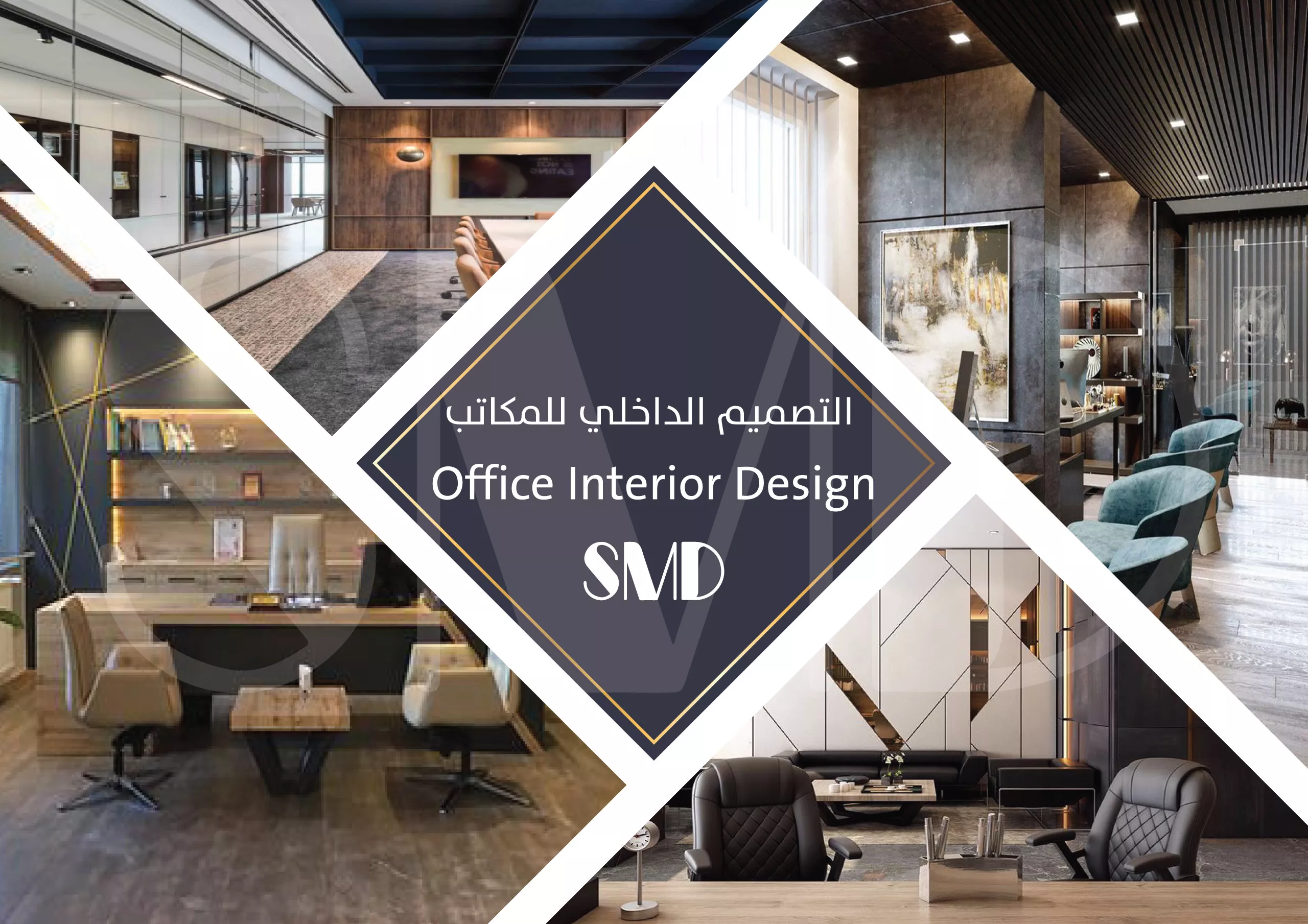
Reference images of office layouts and furnishings. Actual solutions depend on the project plan and requirements.
Technical references
These sources inform the technical guidance. US references provide design context; project requirements must be checked for the relevant country, building and use.
- OSHA — Computer Workstations: Evaluation Checklist — https://www.osha.gov/etools/computer-workstations/checklists/evaluation
- OSHA — Computer Workstations: Workstation Environment — https://www.osha.gov/etools/computer-workstations/workstation-environment
- WBDG — Office Building — https://legacy.wbdg.org/building-types/office-building
- GSA — Buildings and Health: Acoustical Comfort — https://www.gsa.gov/governmentwide-initiatives/federal-highperformance-buildings/highperformance-building-clearinghouse/health/buildings-and-health
- GSA — Sound Matters: How to Achieve Acoustic Comfort in the Contemporary Office, January 2012 — https://www.gsa.gov/cdnstatic/GSA_Sound_Matters_%28Dec_2011%29_508.pdf
- GSA — Space Reconfiguration, Renovation, and Construction — https://www.gsa.gov/governmentwide-initiatives/federal-highperformance-buildings/highperformance-building-clearinghouse/workplace-strategies/project-guidance/space-reconfiguration-renovation-and-construction
Start your dream project today with SMD Decoration
Your space, your vision. SMD Decoration offers interior design, fit-out and renovation in Turkey and Arab markets: homes, apartments, villas, offices, hotels, restaurants, healthcare, education and exhibitions. Reflect your identity, needs and budget.
Explore finishes, painting, upholstery, custom furniture and lighting in modern, classic, contemporary, industrial or eco-conscious styles. Agree services, execution details and handover before work.
SMD Decoration websites
- Main website: smddecoration.com
- Turkey: smddecoration.net.tr
- Oman, Kuwait & Bahrain: turkiyedecoration.com
- Qatar: smddecoration.qa
- UAE: smddecoration.ae
- Saudi Arabia: smddecoration.sa
- Saudi Arabia — additional site: smddecoration.net
- Libya: smddecoration.info
- Iraq: smddecoration.site
SMD accepts conventional currencies and bank transfers; Bitcoin and other cryptocurrencies are not accepted.
Design an office around how your team works
Share your city, office plan, photos, team size and meeting and storage requirements. Discuss space planning, furniture and finishes within a clear scope that suits daily operations.
Email: info@smddecoration.com
Project enquiry