
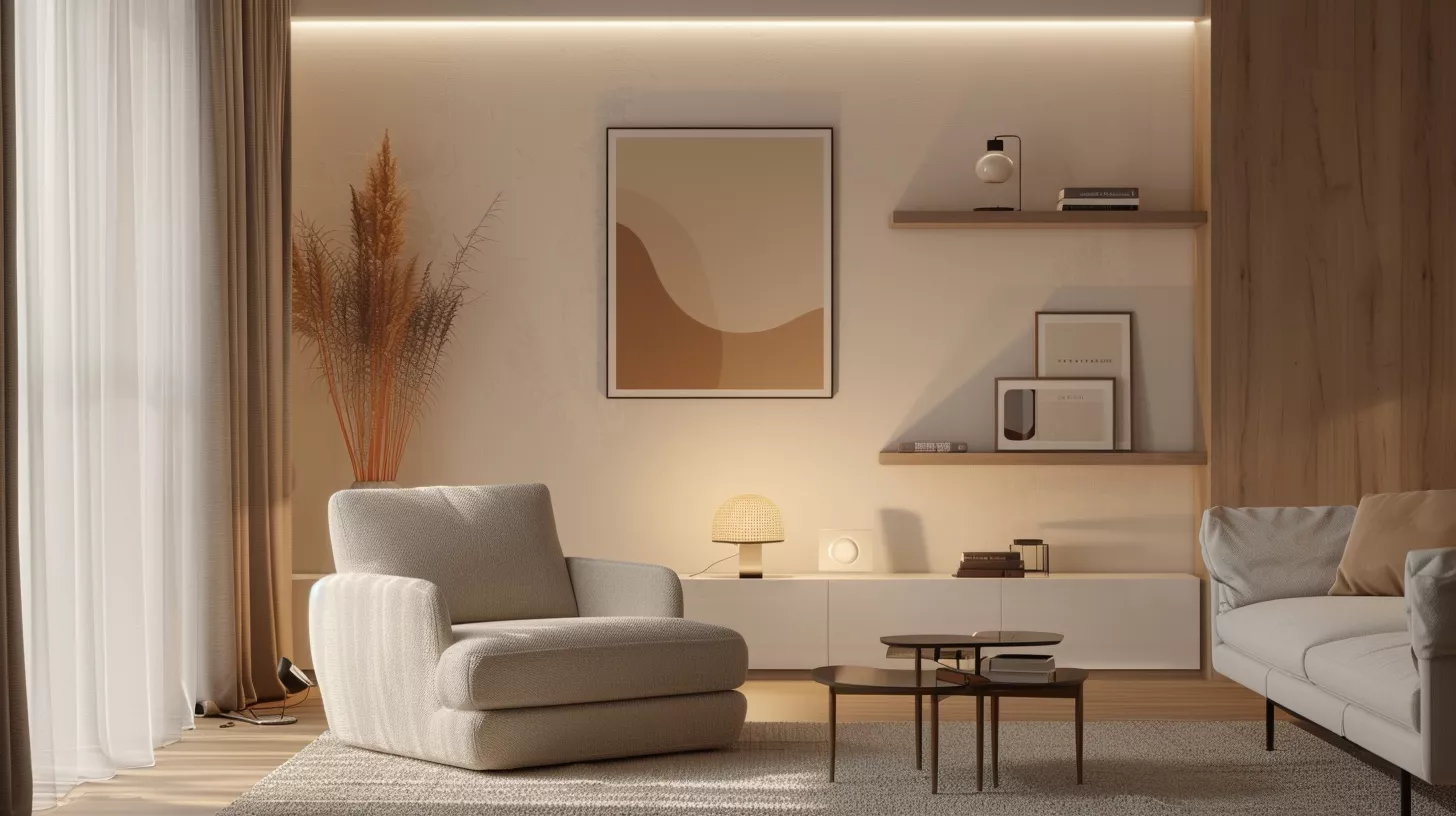
A camera-ready home remains a place to live while providing a corner you can set up consistently for recording. Start with the camera, content and subject position, then test light, background, sound and storage. You do not need to convert every room into a studio, and interior design alone cannot guarantee content quality or reach on TikTok and Reels.
Define the shot before choosing the decor
Decide whether you record a seated presentation, a product on a table or movement through the room. Use the actual phone or camera and recording mode to trial tripod height, framing and the subject position. Test vertical and horizontal formats if both matter: each may reveal different parts of the door, ceiling and floor.
In a small apartment, begin with one adaptable background. Draw the furniture, tripod, opening doors and household circulation. Recording should fit daily life rather than obstruct it.
Choose a background that works within the frame
Keep one clear focal element, such as artwork or an organised shelf. Check objects directly behind the subject and at the frame edges. Review paint or fabric samples through the actual camera under the proposed light. Inspect glass and mirrors for reflections of the phone or lamp; a pleasing view by eye does not approve the recorded image.
Trial an existing chair or desk before buying a full furniture set. For product videos, use the real item to check edge separation, colour and the details viewers need to see.

Control the subject light and background separately
Begin with a controllable light source. Where practical, record with and without daylight, changing one position or setting at a time. Check shadows and reflections on glasses or products. Add background light when it supports the shot, and test dimming in an actual recording for visible flicker.
No single colour temperature suits every camera, material and scene. Record the light settings and time of day, and review colour without a beauty filter. Apple’s Camera Control guide describes exposure and focus locking on supported devices. Check your own device and recording mode rather than assuming every phone has identical controls.

Test recorded speech before fixing the finishes
Record sample speech at the intended filming time. Listen on headphones for background noise, room reflections and contact with clothes or the desk. Compare microphone position and direction according to its instructions, keeping other test conditions consistent.
Shure’s home-recording guide discusses reflective surfaces and soft furnishings. Trial existing curtains, rugs and furniture before buying treatment. Their presence does not establish sound isolation from neighbours or traffic; specialist acoustic work needs its own assessment.
Plan storage, privacy and repeatable setup
- Store the tripod, microphone and small backgrounds near their point of use.
- Keep cables clear of circulation and opening doors; have fixed electrical changes assessed by the relevant specialist.
- Check the frame and mirrors for documents, addresses or people who did not intend to appear.
- Photograph the arrangement and record tripod, light and device settings. Use suitable removable marks where helpful.
- Agree filming times and a simple room-reset routine with the household.
Run a comparison before purchasing equipment
Suppose you film a product explanation at an existing desk. Record a short baseline clip, remove one distracting background object and record again. Next trial a different light position, then a microphone position, while keeping the camera as consistent as possible. Compare product visibility, recorded sound and the setup time you actually measured. Do not attribute every improvement to furniture or assume a percentage saving.
Choose the arrangement that supports both content and ordinary use. Repeat relevant checks when daylight or the product changes instead of applying one fixed recipe to every scene.
Define design deliverables and handover
Request a measured layout for the filming corner, camera and furniture, background samples, a named equipment list, lighting controls and storage details. Identify whether the quotation includes design, purchasing, installation and recording trials. Link the programme to approvals, supply and actual work rather than promising a complete setup in one day.
At handover, record with the intended equipment and review framing, light, sound, access and room reset. The images are illustrative references, not recording-performance measurements or documented completed projects. Editorial review: 19 October 2026. Trial and organisation steps are practical SMD recommendations; details depend on the room, equipment and user.
Plan Your Filming Corner with SMD Decoration
Share room dimensions, photographs, content type, available equipment, filming times and budget. Discuss the background, lighting, furniture, storage and implementation scope while keeping the room comfortable for daily life. Discuss your filming corner.
+90 553 904 12 12
Discuss your project on WhatsApp+966 50 498 6649
Discuss your project on WhatsAppEmail: info@smddecoration.com
SMD websites: Main website · Türkiye · Oman, Kuwait and Bahrain · Qatar · United Arab Emirates · Saudi Arabia · Additional Saudi website · Libya · Iraq · Syria.