
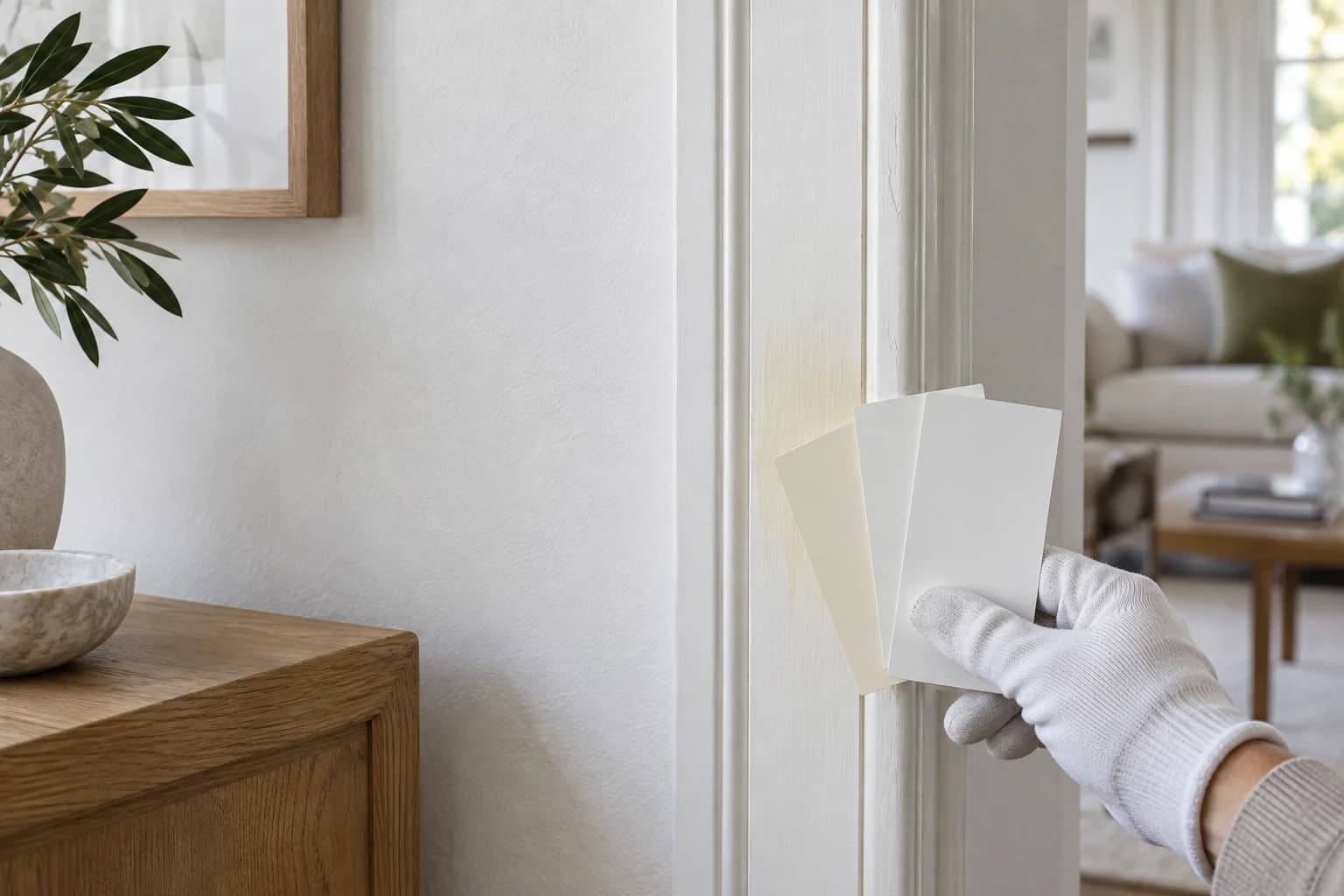
White paint can look yellow because the coating changes, deposits stain its surface, or room lighting changes its appearance. Identify the coating, location and surface condition before choosing cleaning, a primer or repainting. Painting over an unresolved cause may hide it temporarily.
Editorial review: 11 October 2026. SMD Decoration provides an explanation and a practical inspection brief. Images illustrate the subject and do not diagnose a particular wall. The checklists below are proposed working methods; the selected products and substrate determine the actual coating specification.
Has the coating changed, or does the colour look different?
Compare the area in daylight and under the lighting used in the evening. If it looks yellow only beneath a particular lamp, review the white shade and lighting before concluding that the coating has failed. Hold a physical sample beside the surface. A phone photograph or a wall in another room may give an unreliable comparison. Dulux explains how lighting affects wall colours.
A change that remains visible under comparable conditions calls for closer inspection. Record whether it affects the whole wall, a ceiling corner, door trim or an area behind furniture. The pattern is useful evidence, but is not a diagnosis by itself.
A first inspection guide
| Observation | Check | Next step |
|---|---|---|
| Cream colour across old trim or a door | Previous coating, application date and exposure to light. | Review a compatible repainting system. |
| A local patch with a defined edge or ring | Wall or ceiling condition and possible wetting. | Investigate before concealing the mark. |
| Change near cooking or smoking areas | Surface deposits versus a change within the coating. | Try appropriate cleaning and reassess. |
| Yellow appearance only in the evening | Lighting and a physical white sample in the room. | Review colour appearance before repainting. |
| A mark returns after recent painting | Cause, preparation and previous coating system. | Review the work record rather than adding a random coat. |
This is SMD Decoration’s preliminary sorting checklist, not a diagnosis from a picture. More than one cause can occur in the same place. Retain observations rather than excluding possibilities prematurely.
Oil-based and alkyd enamel yellowing
Dulux Trade describes alkyd enamel yellowing as a characteristic of ageing interior oil-based coatings, particularly noticeable in pale shades and places with little daylight. Sunlight is therefore not the automatic explanation for every yellow surface, and colour change alone does not establish poor product quality.
Check an old can or specification if available. Identify whether the substrate is plaster, wood or metal. The term “oil-based” alone does not establish the preparation method or compatibility of subsequent layers. Mixing different paints to prevent yellowing does not address the underlying cause.
Local stains: water, smoke and grease
Sherwin-Williams’ stain guide lists water, smoke and grease among causes of surface discolouration. For water stains, locate and repair the source before using a primer designed to block the stain. Suitable deposit removal precedes the finish coat. A stain-blocking primer does not repair an active leak.

Ask the inspector to separate observations from confirmed findings. A mark beside a bathroom or window can guide investigation without proving the source. In a kitchen, compare exposed and less exposed areas before deciding that the entire coating has changed. Do not assume moisture on one wall will inevitably affect the whole home.
When might cleaning be enough?
Test a small inconspicuous area using a method permitted by the existing coating’s manufacturer. After the test dries, review the colour, sheen and film condition. If a deposit is removed without damage, improved cleaning and care may be sufficient. If the sheen changes or the film loosens, do not apply the same method across the wall without review.
Cleaning cannot be assumed to reverse a change within the coating. Sherwin-Williams’ yellowing guidance distinguishes coating-related and environmental factors, noting that continuing environmental causes can affect a replacement finish. One successful patch does not establish the outcome for every surface.
Build a repainting plan around the cause and substrate
- Record the problem: location, wide and close photographs, timing and known paint type. Separate facts from assumptions needing checks.
- Resolve preceding work: identify who will investigate wetting or deposits and which repairs are needed before painting. A deadline should not erase that dependency.
- Assess the existing film: record adhesion, sheen and damage, and whether local preparation or removal is needed. One method will not suit every wall and door.
- Specify a system: repair materials where required, a primer selected for the need, and a compatible finish. Request product names and technical data rather than “premium paint” alone.
- Prepare a trial area: use the proposed preparation and products in a representative location. Check coverage, sheen and compatibility after the product’s stated interval rather than judging wet paint.
- Approve and record: agree the area, colour, sheen and detailing. Record substitutions before wider application.
Recoat intervals, curing and consumption depend on product instructions and application conditions. A fixed number of hours or coats is not appropriate for every system. A stain being invisible at handover does not establish that its cause was repaired.
Choosing an appropriate white finish
Select a product intended for the substrate and use. Review colour retention, cleaning and sheen in its technical information. When replacing old enamel, discuss a compatible alternative with documented suitability. “Water-based” alone is not a guarantee for every formulation or stain.

- Select the white shade in the room beside the actual flooring, timber and furniture.
- Review the sample in daylight and under the lighting you will use.
- Compare sheen too: a local repair may stand out even when the colour seems similar.
- Keep the colour code, product name, available batch number and application date for maintenance.
- Do not treat a screen colour as an approved physical finish without a sample.
Mistakes that leave the problem unresolved
Common decision errors include repainting before investigation, choosing a general primer without checking its purpose, ignoring layer compatibility or substituting a product without a trial. A darker colour can hide a visual difference without proving the cause has been addressed. Extra coats do not compensate for unsuitable preparation.
Illustrative decision example: a ceiling mark appearing after rain calls for investigation and a repair record before finish approval. A change confined to old door trim calls for a coating and substrate review. These are inspection routes, not documented project results or confirmed diagnoses.
What to send when requesting a survey or quotation
Send your city, room use, approximate area and wide and close photographs. Describe when the change appears and whether cleaning or earlier repainting changed it. Include known substrate and coating information and items requiring protection. This helps distinguish repair work from decorative finishing and identify what needs a visit.
Request a quotation covering preparation, products, trial area, protection, cleaning and handover, plus excluded repairs. A general price per square metre without this scope is difficult to compare. The aim is a suitable consistent finish with the cause addressed, rather than a temporarily hidden mark.
Related paint and colour guides
- Wall paint types and selection
- Oil-based paint uses and application
- The colour wheel for interior combinations
Start your dream project today with SMD Decoration
Your space, your vision. SMD Decoration offers interior design, fit-out and renovation in Turkey and Arab markets: homes, apartments, villas, offices, hotels, restaurants, healthcare, education and exhibitions. Reflect your identity, needs and budget.
Explore finishes, painting, upholstery, custom furniture and lighting in modern, classic, contemporary, industrial or eco-conscious styles. Agree services, execution details and handover before work.
SMD Decoration websites
- Main website: smddecoration.com
- Turkey: smddecoration.net.tr
- Oman, Kuwait & Bahrain: turkiyedecoration.com
- Qatar: smddecoration.qa
- UAE: smddecoration.ae
- Saudi Arabia: smddecoration.sa
- Saudi Arabia — additional site: smddecoration.net
- Libya: smddecoration.info
- Iraq: smddecoration.site
- Syria: smddecoration-syria.com
SMD accepts conventional currencies and bank transfers; Bitcoin and other cryptocurrencies are not accepted.
Bring your vision to life with SMD
Send your city, photographs of affected walls, substrate details and approximate area. Discuss survey, remedial work, preparation, sample approval, painting and handover scope with SMD Decoration before work begins.
Email: info@smddecoration.com
Project enquiry