
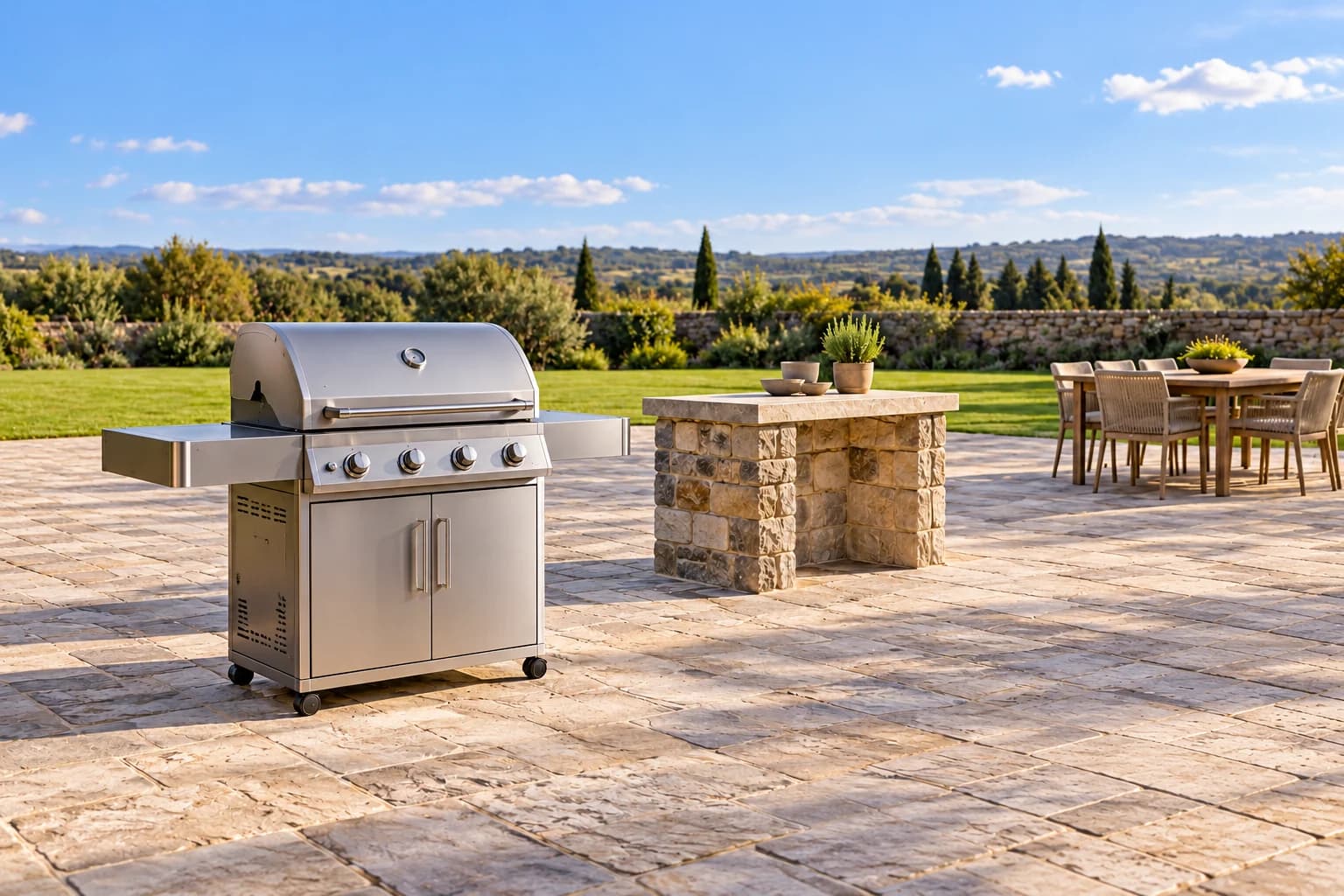
A useful garden barbecue area starts with the appliance and its operating position, followed by preparation, serving and dining space. Measure the garden and access routes, then review appliance instructions, materials and electrical or gas arrangements before building a fixed surround. A restrained design can work well when it supports preparation and cleaning and keeps decoration clear of the heat-producing area.
Define use and choose the appliance before the finishes
Will you host small gatherings or frequent larger meals? Do you need nearby storage and preparation, or will a movable appliance and side table suffice? Establish serving positions and routes back to the kitchen. Start with actual use and add equipment progressively rather than building a large outdoor kitchen without a clear purpose.
Record the appliance model, dimensions, lid movement, operating needs and service access. Fuel and installation are different choices: charcoal, gas, electricity and pellets describe energy sources, while freestanding or built-in describes installation. Do not enclose a portable model in cabinetry unless its manufacturer’s instructions allow it.
Choose the grill position and surrounding open space
NFPA recommends outdoor use for gas and charcoal grills, away from buildings, eaves and branches. Follow appliance-specific clearances and site requirements.
SMD plans access, preparation and seating before adding planting, curtains or shading. Review airflow, smoke reaching windows or neighbours, ground conditions and maintenance access. A garden or balcony does not automatically permit every appliance: check the building and relevant local requirements.

Compare appliances against your routine
- Charcoal grill: review fuel lighting, cooling and ash handling in its instructions, with practical use and storage arrangements.
- Gas grill: review fuel, connections, servicing and installation information with an appropriate specialist.
- Electric grill: confirm that the product suits the intended environment and have the supply and electrical protection reviewed.
- Pellet grill: examine the particular model’s fuel, power, cleaning and storage needs.
Request dimensions, weight, warranty, spares and operating instructions before ordering furniture or building a base. For a built-in unit, agree the details with the supplier, designer and installer rather than relying on an opening that looks right in a photograph.
Organise preparation, serving and seating
Map the route from the kitchen through preparation, cooking and serving, keeping the main path clear when chairs are occupied. Provide places for plates and utensils rather than stacking them on the appliance. WHO guidance calls for separating raw and cooked food; plan separate containers and utensils within the workflow.
Test a measured layout using actual appliance and furniture dimensions. Review the person preparing food, the lid, chairs and any trolley. Do not treat a fixed proportion of garden area or a generic circulation dimension as sufficient for every project.
Select materials, lighting and planting by location
Request surface data for the actual exposure, cleaning and heat conditions, with joint, edge and fixing details. Not every tile, stone or timber suits every position beside a grill. A general material name cannot replace product information and installation details. Review ground stability and drainage with an appropriate specialist where needed.
Light the preparation surface and route without troublesome glare. Have outdoor suitability of fittings and wiring reviewed by an electrical specialist. Arrange planting and textiles in the seating zone after establishing appliance boundaries; decoration should not determine the grill position or block access.
Keep charcoal out of enclosed garden rooms
The U.S. Consumer Product Safety Commission warns that charcoal can release dangerous carbon monoxide. Use charcoal only outside in open air, never for cooking or heating inside a home, garage or tent.
Review the operating manual and do not leave a working grill unattended. Keep operating and care instructions and warranty information, and plan post-use cleaning and storage according to the appliance manual. Neither this article nor its image provides approved installation clearances or instructions for altering gas and electrical services.
Budget and handover checklist
- List the appliance, accessories, base, preparation surface, storage and furniture.
- Separate groundworks, services, lighting, transport, installation and exclusions.
- Attach model information, instructions, material codes and approved samples.
- Review positions, details and maintenance with suppliers and specialists before fixing work.
- Check surfaces, edges, furniture stability and lighting against the agreed scope.
- Receive manuals, warranties and an issue register with correction responsibilities.
Editorial review: 17 October 2026. Linked safety references provide general guidance; the layout and quotation checklist are SMD planning recommendations. The image illustrates a switched-off appliance in a design concept, rather than a safety drawing or completed project.
Plan Your Barbecue Area with SMD Decoration
Share the garden plan and photographs, building position, barbecue model and budget. We can discuss preparation and dining layout, materials, lighting and equipment scope, identifying details for supplier and specialist review. Discuss your garden design.
+90 553 904 12 12
Discuss your project on WhatsApp+966 50 498 6649
Discuss your project on WhatsAppEmail: info@smddecoration.com
SMD websites: Main website · Türkiye · Oman, Kuwait and Bahrain · Qatar · United Arab Emirates · Saudi Arabia · Additional Saudi website · Libya · Iraq · Syria.